
Celebrating the Most Responsible Corporate Communicators of 2026.
As 2026 begins, rising scrutiny and tightening expectations are reshaping sustainability communication, and a small group of organisations is already demonstrating how clarity, fairness, and honesty can build trust in a more demanding landscape.
Date: February 2026
Read time: 5 mins
Author: TAGC
Corporate communicators enter this year operating under unprecedented pressure. Regulatory oversight is more exacting. Public scepticism is higher. Claims that once passed without challenge are now interrogated closely by journalists, regulators, investors, and increasingly informed audiences.
For many organisations, this has created hesitation. Some have narrowed their language to the point of opacity. Others have retreated into technical disclosure that satisfies compliance requirements but fails to communicate meaningfully with stakeholders.
Yet a number of organisations have taken a different path.
Rather than communicating less, they have chosen to communicate better. Rather than relying on ambition or narrative alone, they have invested in precision, explanation, and discipline. Their communications do not promise certainty or perfection. Instead, they offer clarity, proportion, and accountability.
This article highlights organisations whose sustainability communications at the beginning of 2026 consistently reflect four defining principles: honesty, transparency, fairness, and accountability. They are not presented as flawless actors or as benchmarks for sustainability performance. They are recognised for how they communicate, and for the standards they apply to themselves when doing so.
What responsible sustainability communication means in 2026
By early 2026, the parameters of responsible sustainability communication are clearer than ever.
Credibility no longer comes from the scale of ambition alone. It comes from an organisation’s willingness to explain what that ambition depends on, what progress actually looks like, and where limitations remain.
The most responsible communicators today consistently demonstrate several shared behaviours. They clearly distinguish between future ambition and current delivery. They explain the scope and boundaries of their claims, including what is included and what is not. They avoid absolute or unqualified language that cannot be substantiated. They acknowledge uncertainty, trade offs, and areas of harm rather than obscuring them. And they treat scrutiny as a legitimate and necessary part of public communication, not as a reputational threat to be managed away.
These behaviours signal confidence of a different kind. Not confidence that everything is solved, but confidence that the organisation can stand behind what it says.
Organisations demonstrating responsible communication leadership
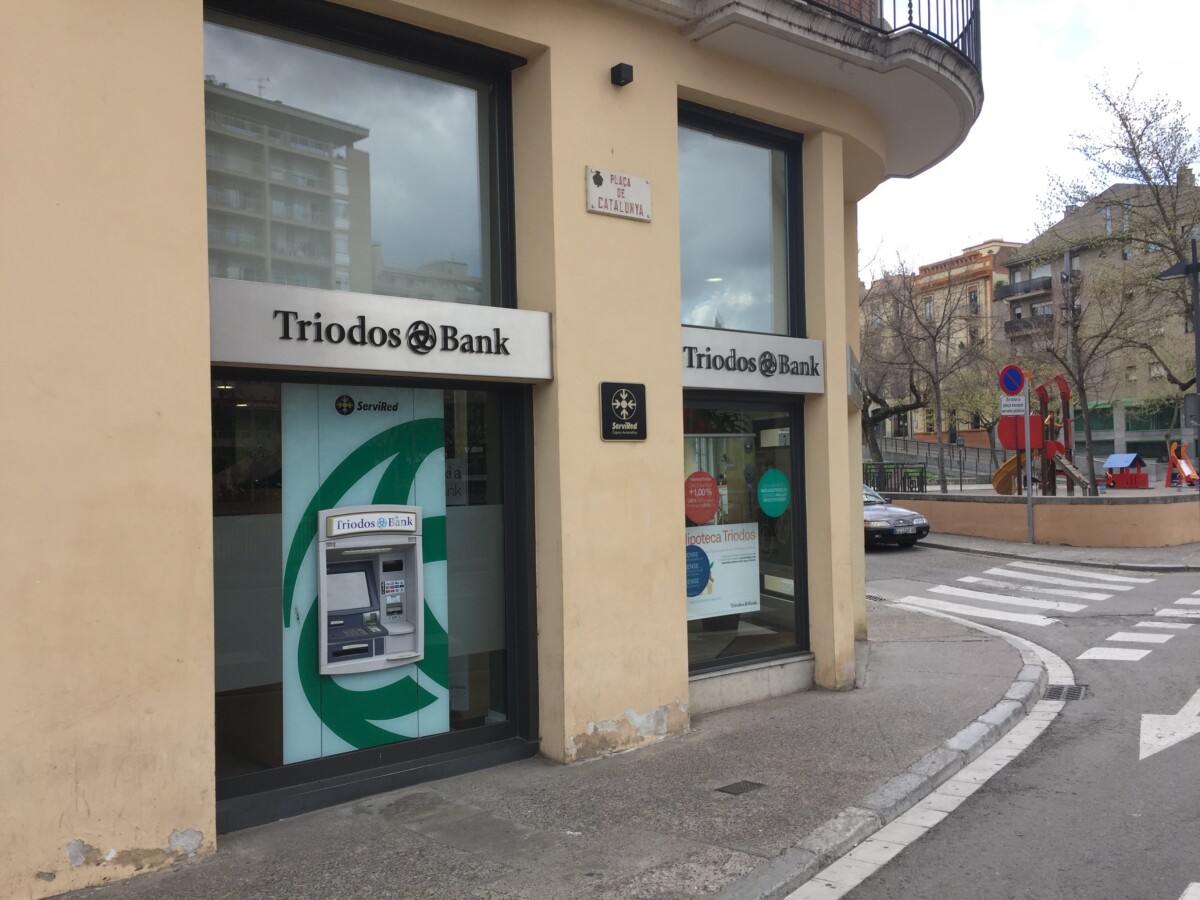
Triodos Bank
Triodos enters 2026 with a long established reputation for treating transparency as a practical communication discipline rather than a positioning statement.
Its sustainability communications focus consistently on where capital is allocated, why those decisions are made, and how they align with stated social and environmental priorities. Importantly, this explanation includes trade offs, constraints, and systemic limits, rather than presenting impact as linear or uncomplicated.
Triodos avoids persuasive sustainability language in favour of explanatory clarity. Progress is contextualised. Uncertainty is acknowledged. Messaging, reporting, and values remain aligned across channels, reinforcing credibility through consistency rather than amplification.
What this shows is that trust is built through explanation, not assertion.

Patagonia
Patagonia continues to demonstrate that honesty does not weaken a brand’s credibility. It strengthens it.
Environmental harm is acknowledged directly and without qualification. Responsibility is framed as ongoing and incomplete, rather than as an achieved state. Activism, ambition, and measurable impact are communicated as related but distinct elements, allowing audiences to understand where values driven action ends and evidenced outcomes begin.
At a time when many organisations have narrowed or softened their sustainability language in response to scrutiny, Patagonia’s consistency stands out. Its communications remain careful, restrained, and aligned with reality, even when doing so limits promotional opportunity.
This shows that credibility grows when organisations resist the temptation to overclaim, even when restraint comes at a cost.

Eileen Fisher
In a sector facing sustained scrutiny for overstatement and simplification, Eileen Fisher’s sustainability communication continues to demonstrate unusual discipline.
Claims relating to materials, circularity, and design innovation are narrowly defined and carefully bounded. Initiatives are framed as evolving practices rather than finished solutions. Learning is shared alongside progress, including where outcomes have fallen short of expectations.
By communicating sustainability as a long term systems challenge rather than a marketing differentiator, the brand maintains fairness both to its audience and to the complexity of the issues it addresses.
This shows that humility and proportion can strengthen trust in high risk industries.

Innocent Drinks
Innocent’s sustainability communications at the beginning of 2026 are characterised by clarity and separation.
Brand storytelling remains warm, human, and accessible. Sustainability disclosures, however, are increasingly precise, particularly in relation to packaging impacts, emissions, and operational trade offs. Importantly, these two modes of communication are clearly distinguished, avoiding confusion between tone and evidence.
As expectations rise, Innocent has shown that approachability does not require simplification, and that accessible language can coexist with careful qualification.
This shows that audiences value clarity and precision more than charm alone.

The Body Shop
The Body Shop continues to communicate sustainability through a strong values driven lens, while steadily improving clarity around evidence, scope, and delivery.
Advocacy is clearly identified as advocacy. Impact is supported by appropriate context and qualification. Complex supply chain realities are explained in plain language rather than reduced to simplified claims.
In an increasingly crowded ethical beauty market, this distinction matters. It allows the organisation to inspire without overstating, and to communicate purpose without blurring the line between intention and outcome.
This shows that credibility depends on knowing when to lead with values and when to lead with evidence.

Tony’s Chocolonely
Tony’s stands out at the start of 2026 for its willingness to communicate limits as clearly as progress.
Its messaging consistently explains what its commitments mean in practice, and just as importantly, what they do not mean. Structural challenges within cocoa supply chains are described openly. Delays, constraints, and partial success are acknowledged without deflection or dilution.
Rather than presenting sustainability as a solved problem, Tony’s invites scrutiny and shared responsibility, reinforcing trust through openness rather than certainty.
This shows that honesty about constraints signals seriousness of intent.
A shared pattern of leadership
Across these organisations, a consistent pattern emerges.
Responsible corporate communicators in 2026 do not rely on louder claims, broader promises, or more emotive storytelling. Instead, they invest in internal governance around language and claims. They align marketing, reporting, and public communications. They frame ambition, progress, and limitation with care. And they prioritise long term credibility over short term reassurance.
This approach does not always generate the most attention. But it does generate trust.
It is not about being seen as the most sustainable organisation. It is about being recognised as the most reliable one.
Why this matters now
As scrutiny continues to intensify in 2026, responsible sustainability communication has become a defining leadership capability.
Organisations that communicate with clarity and integrity are better equipped to build trust, navigate uncertainty, and maintain confidence, both internally and externally, even when progress is complex, uneven, or slow.
This is where the Anti Greenwash Charter plays a vital role. Not by judging sustainability performance, and not by positioning itself as a regulator, but by setting a clear, independent standard for how sustainability should be communicated responsibly.
Because in 2026, trust is not built on claims alone. It is built on how carefully, consistently, and honestly those claims are made.
Communicate About Sustainability with Confidence
If your organisation wants to protect its reputation, reduce greenwashing risk, and communicate sustainability with confidence, we’d love you to join us.
📢 Become a signatory of The Anti-Greenwash Charter.
Shape the future of responsible communication and show stakeholders what honest, trusted sustainability leadership looks like.