Sixty Years Out.
Why an architect signed the Charter, and what a 1960s church has to do with the language of sustainability.
Signatory: Philip Kassanis Studio
Signatory Number: 9
Sector: Architects & Designers
Signatory Since: 2024
👉 Green Claims Policy
Interviewee: Philip Kassanis

A quiet argument
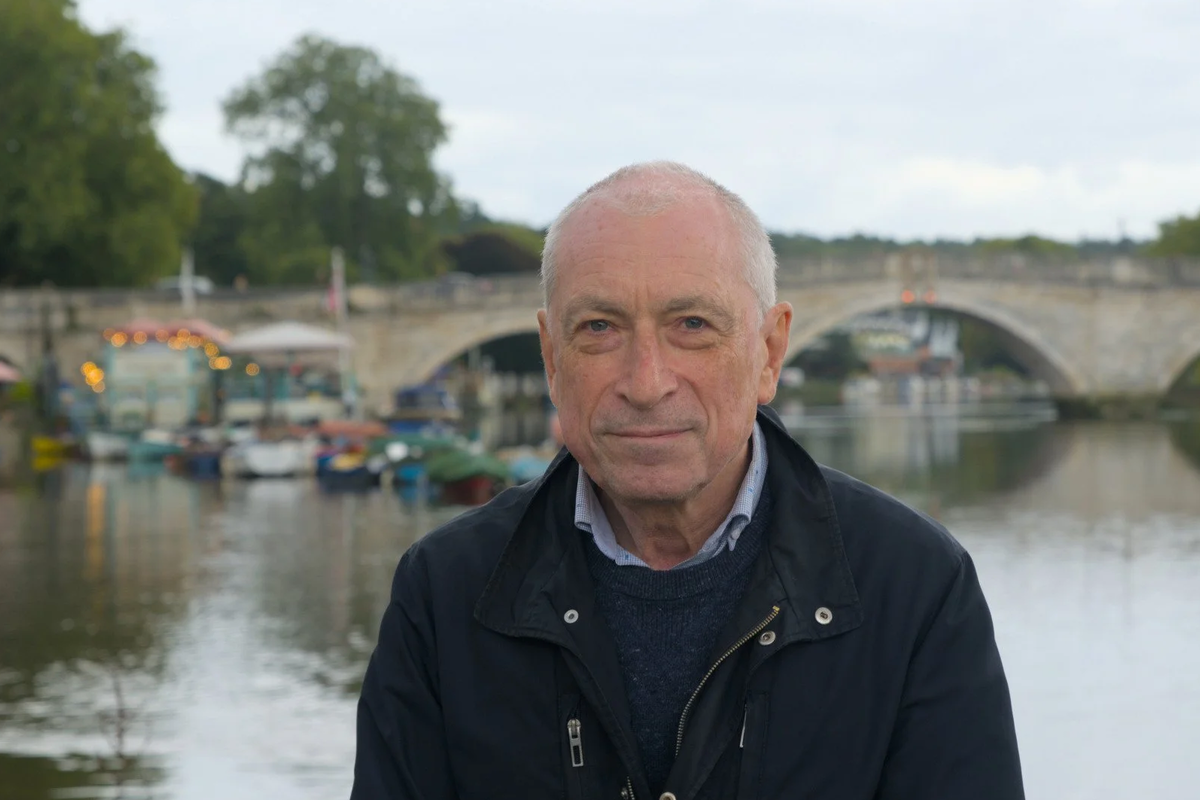
In a 1960s church, listed for its rare hyperbolic paraboloid roof, Philip Kassanis is having a quiet argument. The building has fallen into disrepair. Heritage funding has been secured. A programme of works is in motion. The consultants want to fix the roof and move on.
Kassanis, an architect and urban designer who has been with the project for several years, is asking a more uncomfortable question.
If this building is to serve for another six decades, what happens when the summers get hotter?
You cannot, he argues, plan the next sixty years of a building without modelling its energy. And if funding does not stretch to every intervention today, the answer is not to brush the problem aside, but to ensure that nothing done now forecloses what might be done later.
This stance has, by his own account, made him unpopular. It is also the kind of thinking the sustainability conversation tends to be short of.
Signalling integrity
Philip joined The Anti-Greenwash Charter because he wanted a clear way to signal his integrity. The phrasing is his own, and worth lingering on. He did not say demonstrate his sustainability credentials. He said signal his integrity. The distinction matters.
Greenwash, he points out, is not new. People have always tried to elevate themselves with a green label. What has changed is the surrounding environment, a swirl of competing claims in which a reasonable person can no longer easily tell what is true.
In that landscape, an unevidenced commitment to integrity is indistinguishable from its opposite. A marker is needed.
A marker, not a regulator
The Charter, in his telling, is that marker. It is not a regulator. It does not judge whether a business is sustainable.
It asks something more specific, and more useful: is the business being truthful and transparent about how sustainable it is?
The consequence shows up in practice. Working with a client on a rail-based regeneration project, the kind of scheme in which green and net zero are reached for early and often, Philip has felt obligated to press for definitions. What is being claimed, exactly? He has not had to invent the discipline.
His signature on the Charter requires it of him. And when the stakeholders include an institution that intends to hold land for generations rather than sell it on, that public commitment to substantiated language stops being a hurdle and becomes a reason to be taken seriously.
The same instinct
Two threads of his thinking sit closer than they first appear. On the church: don’t act today in ways that prevent acting better tomorrow. On the Charter: commit publicly to language that holds up to scrutiny, even when the surrounding noise rewards looseness.
Both are the same instinct. Don’t foreclose. Don’t take the shortcut that costs the longer option. Leave the next sixty years a little less constrained than they would otherwise be.
It is not a fashionable instinct, and it does not always win the room. But it is what serious work, on buildings and on language, has always required.
Be Recognised for Responsible Communication
Join The Anti-Greenwash Charter and position your organisation as a leader in responsible, transparent communications. Take the next step today and start your journey toward greater accountability and trust.