
EmpCo Is Coming. The Brands Already Doing This Well Have Nothing to Fear.
EmpCo, the EU’s new rule on green claims, takes effect on 27 September 2026, and the brands already committed to evidence-based sustainability communication have nothing to fear from it.
Date: September 2026
Read time: 3 mins
Author: AGC
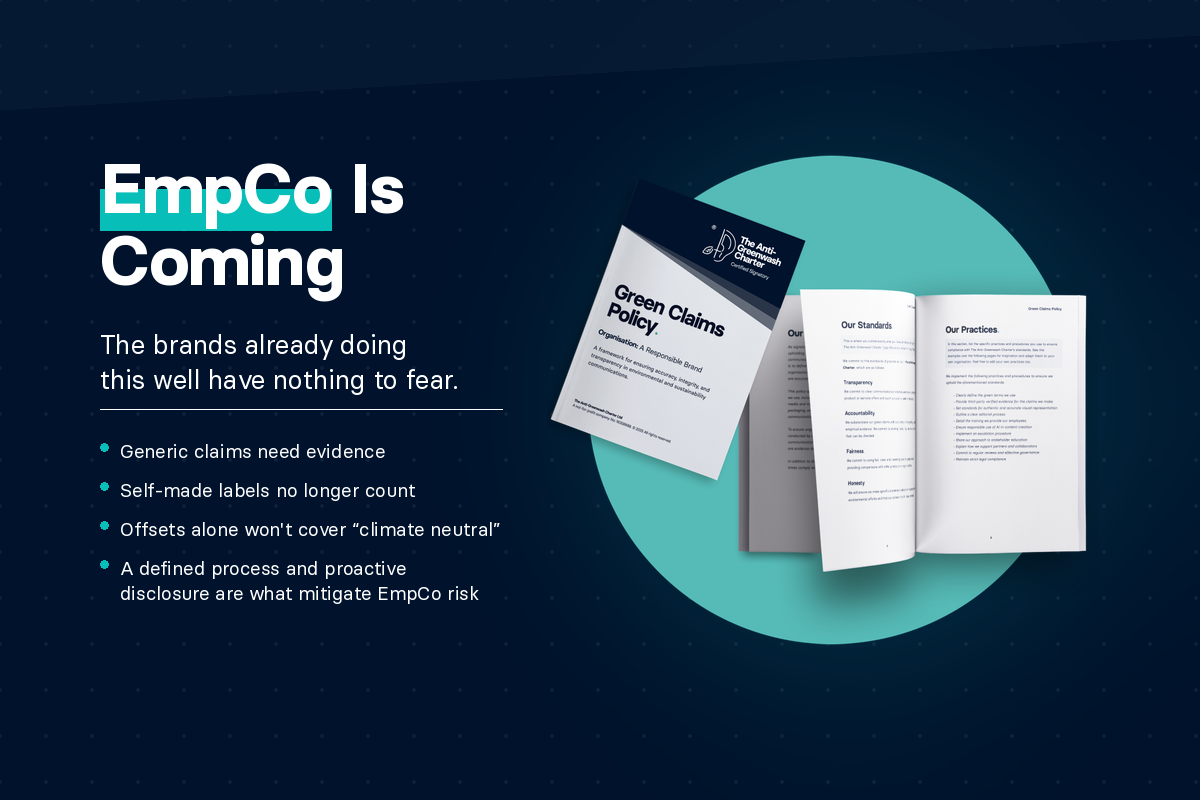
From 27 September 2026, a claim like “eco-friendly” on a product sold in the EU will need proof behind it. This is the effect of Directive (EU) 2024/825, known as EmpCo, the Empowering Consumers for the Green Transition Directive.
For brands that have already built real evidence behind their sustainability claims, this is not a new burden.
It is a legal standard catching up with where they already stand.
What EmpCo changes
EmpCo updates two existing pieces of EU consumer law. It became law in March 2024. Member states had until 27 March 2026 to bring it into their own national laws. The rules take effect on 27 September 2026, with no grace period for existing stock.
Three changes matter most for marketing teams:
- First, generic claims like “green,” “eco-friendly” or “climate-friendly” will be unlawful unless a brand can prove genuinely excellent environmental performance.
- Second, brands can no longer create or certify their own sustainability labels; a label now needs to come from a recognised public or independent body.
- Third, a “climate neutral” claim built only on buying offsets, rather than on real reductions, is banned.
None of this should be a surprise. It simply brings the law into line with what careful communicators have been doing for years.
What our roundtable found
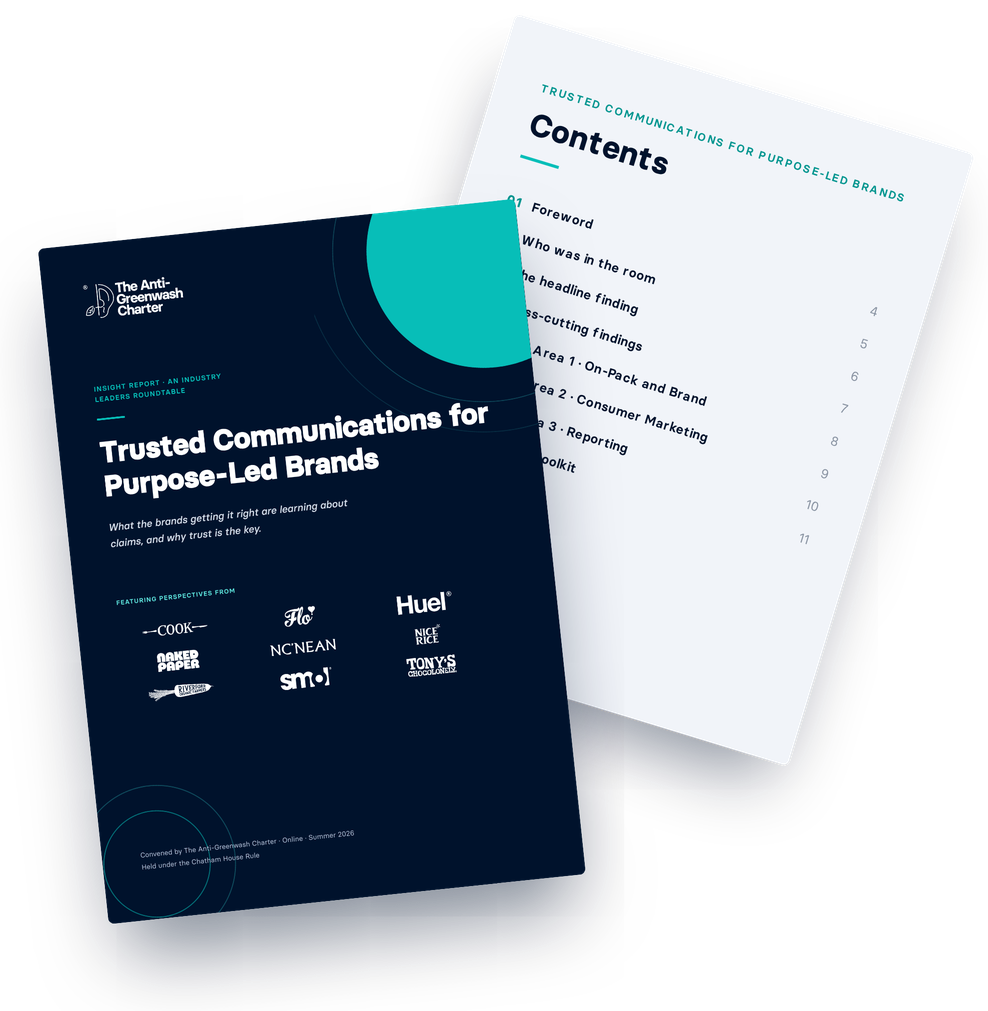
Our recent report, Trusted Communications for Purpose-Led Brands, brought together nine purpose-led brands, including COOK, Huel and Tony’s Chocolonely, to talk about how they build trust through sustainability communication. What they described lines up closely with EmpCo.
Participants said they had cut back the number of claims they make. They now lead with one clear, well-evidenced statement instead of a broad one. They also said they had replaced blanket percentage claims with specific figures tied to a named product, because a broad claim only needs one exception to fall apart. And they described a two-step review: someone checks the evidence first, then someone else improves the wording.
These practices already meet the standard EmpCo sets.
They were built for a simple reason: precision earns trust, and trust is what protects a brand’s next claim, next product and next piece of scrutiny.
What to do now
For brands already committed to responsible communication, EmpCo confirms good practice rather than disrupting it. Four things worth checking:
- Review every generic claim. Words like “green,” “eco-friendly” or “sustainable” need specific proof, or they need to go.
- Check any self-made label or symbol on your packaging. If it has never had independent certification behind it, now is the time to get that in place.
- Look closely at any “climate neutral” or “carbon neutral” claim. If it relies only on offsets rather than real reductions, it will not meet the new standard.
- Apply the same checks to anyone speaking for your brand, including influencers, since your brand stays responsible for what they say.
The wider point
EmpCo is a legal deadline, but it is worth seeing as something more useful than that.
It puts into law what trust-led brands already understood: a claim is only worth making if you can defend it to a customer, a retail buyer, and a regulator.
Brands that already work this way will barely notice the date pass. Brands that treated it as optional now have a deadline instead of a choice.
Be Recognised for Responsible Marketing and Communications
👉 Become a signatory of The Anti-Greenwash Charter.
Shape the future of responsible communication and show stakeholders what trusted sustainability leadership looks like.