The Regulation That Was Meant to Save Us From Lies

The Regulation That Was Meant to Save Us From Lies.

Why corporate greenwashing is still thriving — and what we do when the rules go silent

Date: August 2025
Read time: 3 mins
Author: The Anti-Greenwash Charter
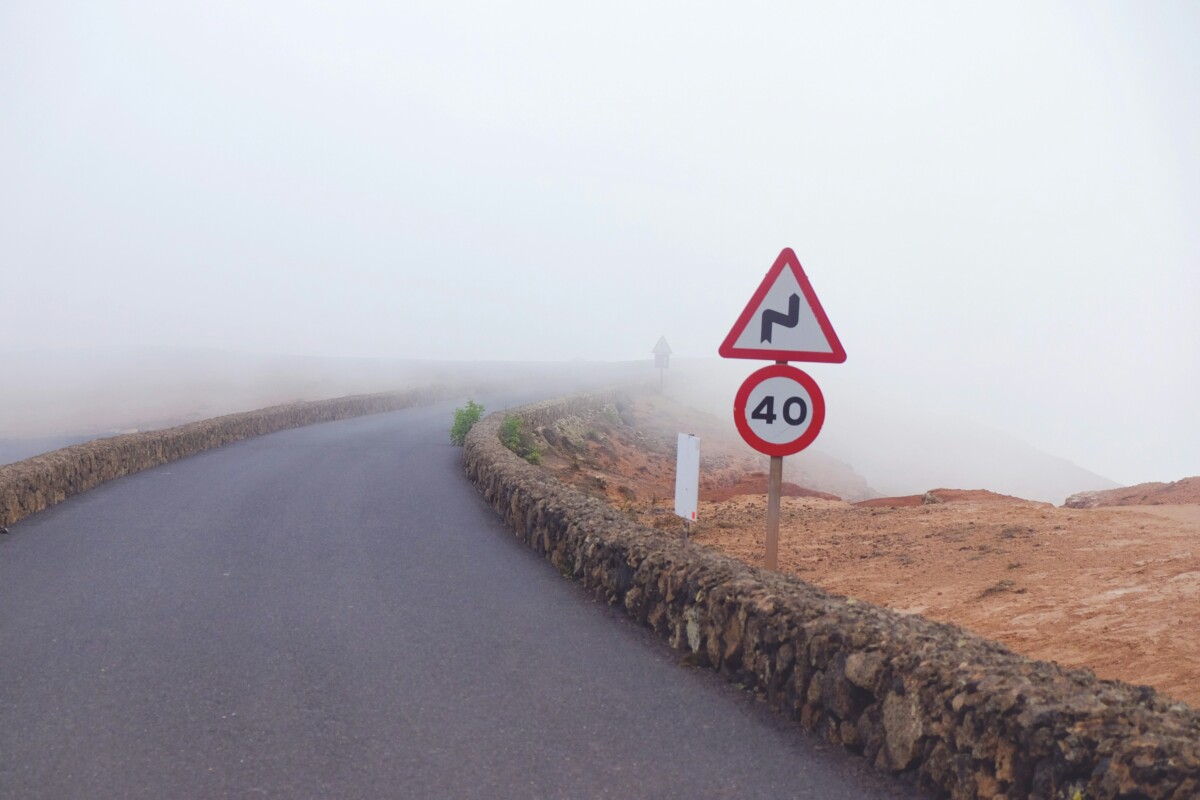
For a brief moment, it looked like the era of vague, feel-good climate claims was about to end.

The EU had proposed a sweeping Green Claims Directive — a law that would have required companies to back up environmental claims with hard evidence. No more “eco-friendly” without substance. No more “climate neutral” based on offset smoke and mirrors. Green would finally mean something.

And then, in mid-2025, the European Commission quietly withdrew it.

Too complex. Too burdensome. Too politically inconvenient.

And so the silence returns — not just from brands, but from the regulators meant to hold them accountable.


The Invisible Cost of Inaction


The global marketplace is awash in sustainability promises. From carbon-neutral airlines to biodegradable trainers to ESG-branded investments, the climate narrative is a cornerstone of modern brand identity.

But as the number of claims rises, so does the uncertainty around their credibility. And now, in the absence of clear regulatory guardrails, trust has become a free-floating asset — untethered from truth.

This isn’t a fringe issue. Greenwashing doesn’t just mislead customers — it erodes climate ambition. It rewards opacity over action. It penalises those who disclose transparently while emboldening those who posture.

“Every unverified claim is a tax on integrity,” says Charlie Martin, CEO of The Anti-Greenwash Charter. “It confuses the market and delays the work we actually need to do.”


Why the Regulatory Landscape Is So Uneven


While some markets are tightening their grip — the UK’s Green Claims Code, for example, gives the CMA power to investigate misleading environmental messaging — enforcement is patchy. Guidance exists, but there’s still no unified legal standard for sustainability communications across most sectors.

In the U.S., the Federal Trade Commission is updating its Green Guides — but progress is slow. In Australia, companies like Etihad and Lufthansa have faced legal action for “green gloss” ads, but these are still edge cases, not industry norms.

And in the EU? The withdrawal of the Green Claims Directive has left a void.

The message to business is confusing: Be bold about sustainability — but tread carefully. Be transparent — but don’t say too much.

It’s no wonder that greenhushing is on the rise.

 

We Built a Market Where It’s Safer to Say Nothing Than to Say Something Wrong


This is the most insidious form of failure: not the absence of rules, but the abundance of fear.

Fear that saying the wrong thing will trigger reputational ruin. Fear that minor missteps will be framed as moral failure. Fear that brands who try to communicate honestly will be punished while others skate by on platitudes.

So they go quiet.

They scrub climate language from ads. Pull social media campaigns. Pause their reporting.

And in the vacuum left behind, the loudest voices are often the least credible.


What We Need Now: Independent Guardrails, Voluntary Courage


If regulation can’t (or won’t) keep up, what fills the gap?

Increasingly, it’s independent frameworks and verification systems. Tools like green claims policies, sector-led charters, and third-party reviewers are stepping in — not to replace regulation, but to make progress possible in its absence.

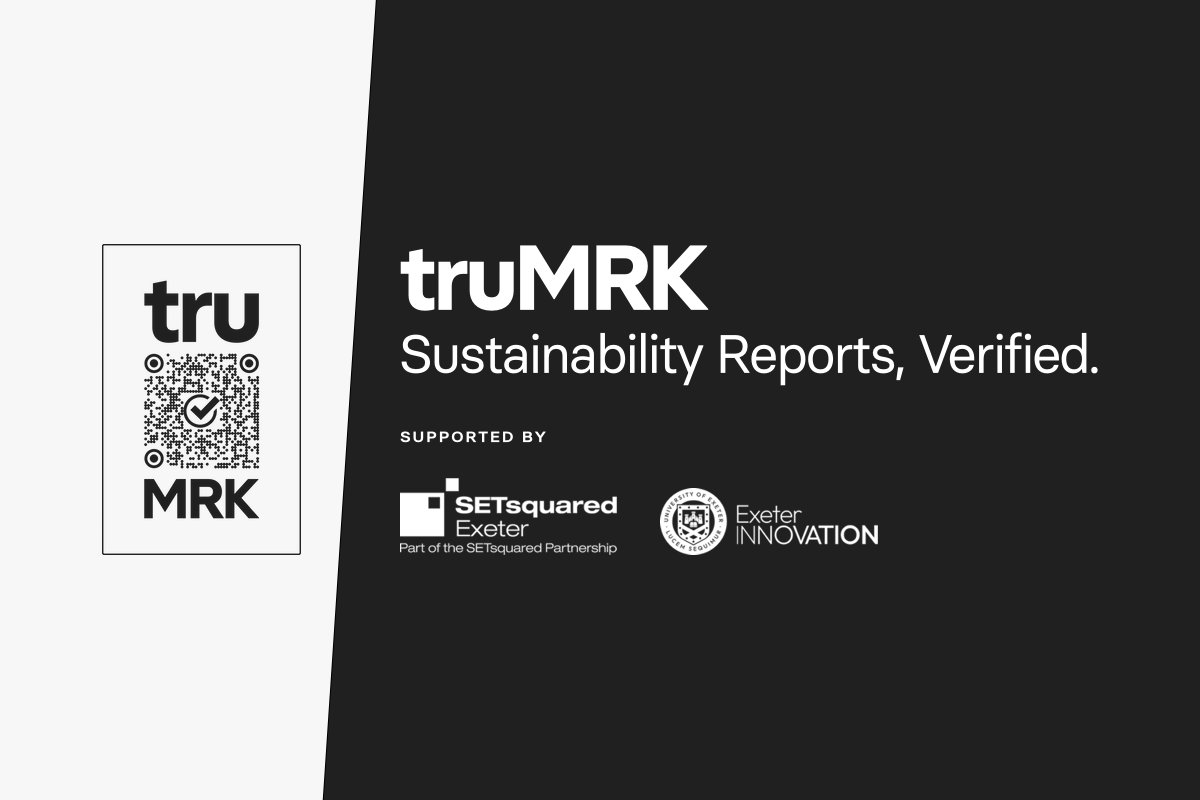
One such tool, truMRK, offers organisations a way to review their sustainability reports before publication. Not to validate performance — but to assess how claims are communicated. Whether the evidence is sound. Whether the language aligns with guidance from the CMA, ASA/CAP, ISO, and GRI.

It’s not flashy. But it’s credible. And that’s the point.


Corporate Integrity Is Now Voluntary — And That’s Both a Risk and a Responsibility


In a better world, honesty wouldn’t need to be optional. But in this one, it is.

The responsibility now falls on business leaders, marketing teams, and sustainability professionals to hold the line. To speak with care — and to back it up. To build trust without waiting for regulators to show them how.

Because the ESG backlash is growing. The legislation is stalling. And the public is watching.

If climate progress is to mean anything, it has to be believable. And that means building a culture — and a system — where the truth has a place to stand.

Sustainability Communications with Confidence


If your organisation wants to protect its reputation, reduce greenwashing risk, and communicate sustainability with confidence, we’d love you to join us.

📢 Become a signatory of The Anti-Greenwash Charter.
Shape the future of responsible communication and show stakeholders what honest, trusted sustainability leadership looks like.

Join the Charter →

The Most Dangerous Kind of Silence: Why Greenhushing Puts Climate Progress at Risk

The Most Dangerous Kind of Silence: Why Greenhushing Puts Climate Progress at Risk.

There’s a form of climate delay that doesn’t come from denial. It comes from fear.

Date: July 2025
Read time: 4 mins
Author: The Anti-Greenwash Charter

Not the fear of change, or cost, or commitment—but the fear of saying the wrong thing. And so many organisations, particularly in the built environment, are choosing to say nothing at all.

This is greenhushing—and it’s not just common. It’s becoming default.

In the latest episode of the Futurebuild Podcast, Charlie Martin, CEO and founder of The Anti-Greenwash Charter, names the problem plainly. Greenwashing may still grab headlines, but it’s greenhushing—silence, self-censorship, the retreat from visibility—that is quickly emerging as the greater threat.

And in an era when trust, transparency, and rapid climate progress are non-negotiable, it’s also a threat we can’t afford to ignore.


The Paradox: Progress Is Happening—But Fewer Are Talking About It


Drawing on insights from the first annual Green Claims Pulse Survey, a collaboration between Futurebuild, The Carbon Literacy Project, and Hattrick, Charlie outlines a stark contradiction: many organisations are more active on sustainability than ever, but less willing to talk about it.

  • More than a third of built environment professionals said their organisations have pulled back from communicating sustainability progress.

  • Two-thirds reported increased fear around greenwashing allegations over the past year.

“We’re seeing organisations doing good work, but feeling unsafe sharing it,” Charlie explains. “They’re afraid that if they get one word wrong, they’ll be accused of greenwashing.”

It’s a shift from spin to silence. And while that may feel safer, it risks something bigger: credibility, momentum, and public trust.


Marketing as a Catalyst—Not Just a Mouthpiece


But this isn’t a takedown of communications. It’s a call to elevate it.

In the podcast, Charlie argues for a reimagining of marketing’s role—not as a promoter of sustainability, but as a catalyst for it. When used with care and honesty, marketing becomes a bridge between intention and impact. Between ambition and accountability.

And it starts, he says, with radical transparency.

Not because transparency is fashionable—but because it’s functional. It’s the only thing that builds lasting trust.

“We don’t need perfection,” Charlie says. “We need brands to show their work. To be honest about what they’ve done, what’s still messy, and what they’re trying to get right.”


The Built Environment Is Being Watched—But Not Heard


The construction and built environment sector accounts for around 40% of the UK’s carbon footprint. Its decarbonisation isn’t a nice-to-have—it’s central to national climate targets.

And yet, according to the Green Claims Pulse Survey, only 18% of the public over 45 believe the industry is building a sustainable future. Gen Z is slightly more optimistic—but deeply sceptical of vague or performative claims.

The gap isn’t just in action. It’s in communication. The sector has the data, the pilots, the partnerships—but not always the confidence or frameworks to tell its story with integrity.

That’s where Charlie and the Anti-Greenwash Charter see an opportunity.


Radical Transparency Is the New Leadership


The Charter’s mission isn’t to police or shame brands—it’s to equip them. To create a culture where marketers, sustainability teams, and leadership have the tools, language and backing to communicate responsibly.

That includes encouraging brands to:

  • Create internal green claims policies

  • Align with trusted guidance like the CMA’s Green Claims Code

  • Invite third-party review of sustainability communications

  • Publish with confidence—not caution

These aren’t just box-ticking exercises. They’re credibility infrastructures.

And beyond that, the podcast hints at the rise of new mechanisms—like truMRK, a mark of communication integrity that provides an independent review of sustainability reports, checking not performance data, but how claims are communicated, and whether the language stands up to scrutiny.

In a regulatory grey zone, tools like these are helping bridge the gap between silence and substance.


Final Word: The Risk Isn’t Talking—It’s Disappearing


Greenhushing isn’t a scandal. It’s a warning. One that says: the pressure to communicate has become so intense, many would rather opt out than get it wrong.

But opting out has consequences too. It leaves the floor open for the loudest voices—not always the most honest ones. It weakens culture change. And it slows collective momentum when we can least afford delay.

If the built environment is going to meet the moment, it needs to find its voice again—not louder, but braver. Not perfect, but clear.

Because in the end, the climate doesn’t care how beautiful your brand story sounds. But people do. And people are how movements build.

Sustainability Communications with Confidence


If your organisation wants to protect its reputation, reduce greenwashing risk, and communicate sustainability with confidence, we’d love you to join us.

📢 Become a signatory of The Anti-Greenwash Charter.
Shape the future of responsible communication and show stakeholders what honest, trusted sustainability leadership looks like.

Join the Charter →

Greenhushing Is Real — But It’s Not Inevitable

Greenhushing Is Real— But It’s Not Inevitable.

Why fear is silencing sustainability, and how credibility—not caution—is the future of climate leadership

Date: July 2025
Read time: 3 mins
Author: The Anti-Greenwash Charter

In the world of corporate sustainability, the volume of communications is dropping. Not because nothing’s happening—but because too much might be said the wrong way.

This phenomenon now has a name: greenhushing. And it’s growing fast.

According to new research from Futurebuild, The Anti-Greenwash Charter, The Carbon Literacy Project and Hattrick, over a third of built environment professionals say their organisations have actively pulled back on sustainability communications in the last 12 months.

Not because of a lack of progress—but because of a growing fear: the fear of getting it wrong.


When Fear Silences Progress


For many in construction and the wider built environment, the pressure to deliver net zero targets is real—but so is the fear of public scrutiny, media backlash, or regulatory missteps.

It’s created a culture of caution. And in some cases, complete silence.

Yet this sector is critical. Responsible for over 40% of UK emissions, it’s central to retrofit, resilience, regeneration. To climate action.

But only 18% of over-45s believe the industry is building a sustainable future. Trust is fragile. And trust is built on transparency—not perfection.


Confidence Is the Missing Link


The research makes something else clear: greenhushing isn’t a values problem. It’s a skills and systems gap.

  • Just 18% of professionals feel very confident spotting greenwashing

  • Half of marketers say they feel uneasy working on sustainability campaigns

  • And only 5% have final say over what is communicated

This isn’t about saying less. It’s about not knowing what’s safe to say—and who decides.

“People aren’t greenhushing because they don’t care,” said one survey respondent. “They’re doing it because they’re scared of saying the wrong thing—even when the intention is good.”


From Silence to Structure


Despite policy setbacks like the EU’s stalled Green Claims Directive, there is growing appetite for practical, independent support. Not more PR spin—just clarity, checks, and credible communication.

That might take the form of:

  • Publishing internal green claims policies to guide comms teams

  • Using third-party reviews to strengthen and sanity-check messaging

  • Adopting sector-wide frameworks that promote transparency over perfectionism

One emerging approach offers sustainability teams the option to submit reports for independent review—not to verify performance, but to ensure their messaging aligns with key regulations like the Green Claims Code, ASA guidelines, and ISO standards. A transparency report and certification accompanies the result—not as a marketing stunt, but as a quiet show of diligence.

It’s not flashy. But it’s effective. And it helps teams speak more confidently without falling silent.


The Case for Courageous Clarity


Greenhushing may feel like a protective move—but over time, it leaves organisations vulnerable in other ways.

Without communication, culture change stalls. Trust erodes. The public disengages. And the organisations doing meaningful work lose the ability to differentiate themselves from those who aren’t.

Progress doesn’t need to be perfect before it can be communicated. But it does need to be honest, humble, and evidence-led.

“Silence isn’t a long-term strategy,” said Charlie Martin, CEO of The Anti-Greenwash Charter. “At best, it’s a pause. At worst, it’s a loss of public confidence.”


The Real Shift Begins With Confidence


There’s no single fix for greenhushing. But the organisations that will lead the next era of sustainability will be those that can speak credibly—not loudly, but clearly.

That doesn’t require more marketing. It requires better foundations. And perhaps most of all, the willingness to say:

“This is what we’ve done. Here’s where we’re headed. And this is what we still don’t know.”

Because in a noisy world, quiet transparency speaks volumes.

Sustainability Communications with Confidence


If your organisation wants to protect its reputation, reduce greenwashing risk, and communicate sustainability with confidence, we’d love you to join us.

📢 Become a signatory of The Anti-Greenwash Charter.
Shape the future of responsible communication and show stakeholders what honest, trusted sustainability leadership looks like.
Join the Charter →

Introducing truMRK: A New Standard in Sustainability Transparency

Introducing truMRK: A New Standard in Sustainability Transparency.

Date: July 2025
Read time: 3 mins
Author: The Anti-Greenwash Charter

We’re proud to announce the launch of truMRK — a new independent verification service designed to help organisations communicate their sustainability claims with greater clarity, evidence, and integrity.

Born from the mission and values of The Anti-Greenwash Charter, truMRK responds to a growing challenge facing businesses today: how to earn trust in a landscape flooded with vague, exaggerated, or poorly evidenced environmental messaging.


Why We Built truMRK


At The Anti-Greenwash Charter, we’ve long been committed to raising standards in sustainability communication. Through our campaign reviews, guidance frameworks, and training, we’ve supported organisations in aligning their claims with regulatory expectations and public trust.

But we also saw the need for a practical, visible tool — one that could help businesses demonstrate they’ve done the work to substantiate their claims, and that their sustainability communications can stand up to scrutiny.

That’s where truMRK comes in.


What is truMRK?


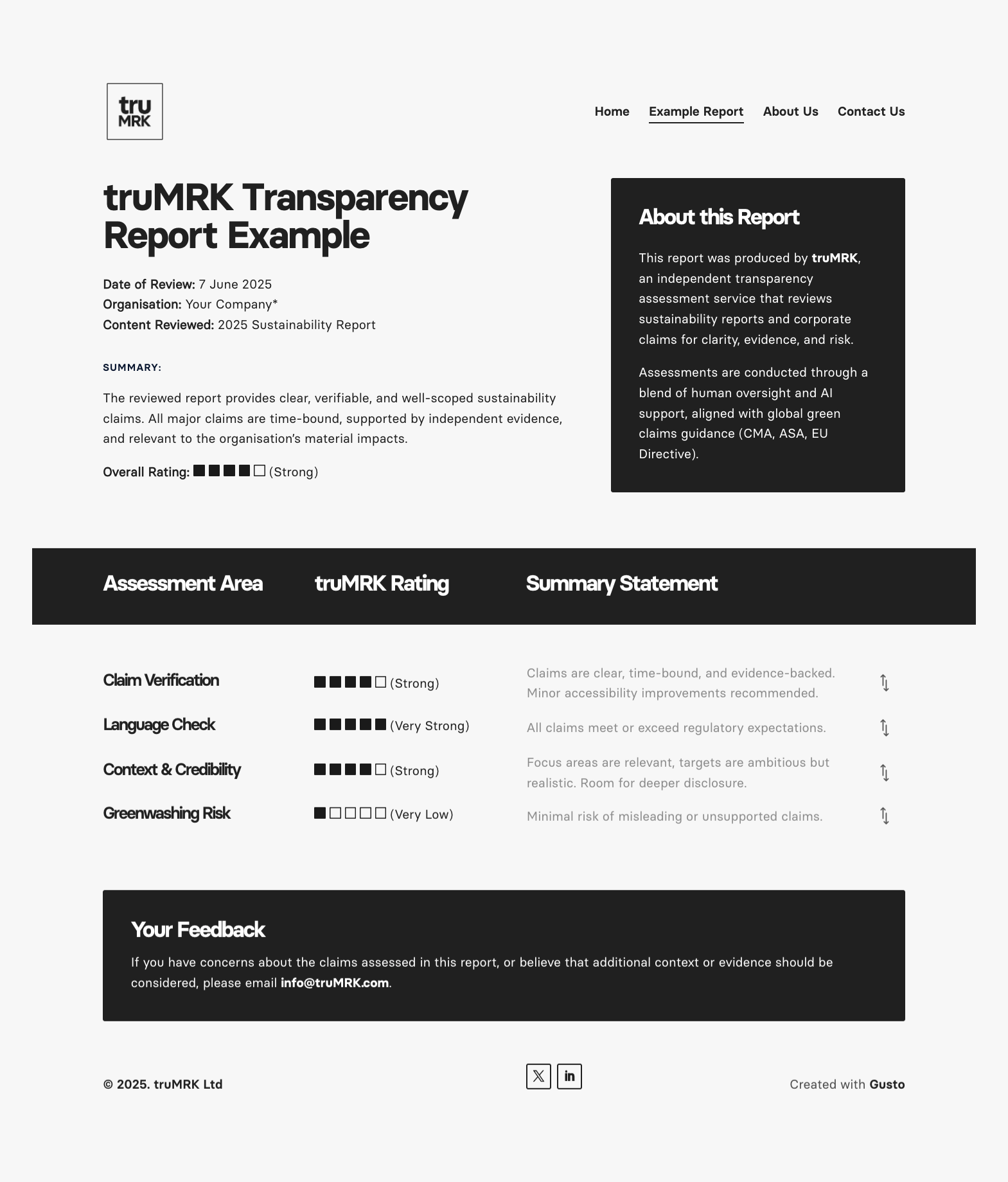
truMRK is a digital mark of editorial integrity — awarded to sustainability reports that have been independently reviewed for transparency and responsibility.

Each truMRK links to a concise, public-facing Transparency Report. This outlines:

  • Which claims were assessed

  • What evidence supports them

  • How responsibly language is used

  • Whether sources are credible and appropriate

  • Where risks, gaps, or weaknesses remain

Importantly, the review doesn’t attempt to verify technical performance data. Instead, it evaluates how clearly and responsibly an organisation communicates its claims — and whether the content meets evolving stakeholder expectations, regulatory guidance (including the CMA’s Green Claims Code, ASA/CAP standards, ISO 14021), and best practice in ESG reporting.

Each report concludes with a final Transparency Score, helping organisations measure and improve how they communicate their impact.


Who It’s For


truMRK is designed for forward-thinking businesses that want to build trust through accountability — not just promises. It supports:

  • Sustainability & ESG teams aiming to ensure claims are well-evidenced and responsibly framed

  • Marketing & Comms professionals looking to reduce reputational risk and avoid greenwashing

  • Compliance & legal teams ensuring alignment with relevant regulations and standards

It’s especially useful for organisations preparing to publish a new sustainability or ESG report and wanting independent feedback before going live.


Founding Launch Offer


To mark the launch, truMRK is inviting 20 purpose-led organisations to become founding clients. These early partners will receive:

  • An independent review of their next sustainability report

  • A public Transparency Report and truMRK badge

  • Recognition as a founding contributor helping set the standard for credible sustainability communications

This is a limited opportunity to shape the future of the platform and lead by example in a critical area of corporate responsibility.

👉 Find out more and request access at trumrk.com


A Natural Extension of the Charter’s Mission


truMRK is more than a new tool — it’s a natural next step in The Anti-Greenwash Charter’s mission to promote transparency, rigour, and accountability in sustainability marketing. As greenwashing continues to erode public trust, businesses need practical ways to show they’re different.

With truMRK, we’re helping them do just that.

Sustainability Communications with Confidence


If your organisation wants to protect its reputation, reduce greenwashing risk, and communicate sustainability with confidence, we’d love you to join us.

📢 Become a signatory of The Anti-Greenwash Charter.
Shape the future of responsible communication and show stakeholders what honest, trusted sustainability leadership looks like.
Join the Charter →

EU Pauses Anti-Greenwashing Law: What It Means for Sustainable Communications

EU Pauses Anti-Greenwashing Law: What It Means for Sustainable Communications.

Date: June 2025
Read time: 2 mins
Author: The Anti-Greenwash Charter

In a surprising move, the European Commission has announced it will withdraw the proposed Green Claims Directive, halting negotiations that would have required companies across the EU to substantiate environmental claims — like “climate neutral” or “recycled content” — with independent evidence.


Why the Law Mattered


  • A 2020 Commission study found that over half of environmental claims were vague or unsubstantiated.
  • The Directive aimed to tackle this by mandating independent verification and penalties for false, vague, or misleading claims.

This would have aligned with reforms passed by the European Parliament earlier this year, requiring environmental claims to be based on scientific evidence, third-party certification, and clear labelling.


Why the Rollback Happened


  • The European Commission cited an overwhelming administrative burden on micro businesses if they were included in the law.
  • Some lawmakers, particularly from conservative groups, argued the Directive was overly complex and costly, threatening to block the legislation unless it was withdrawn.


The Consequences


  • Without the Directive, companies won’t face mandatory pre-approved verification or legal penalties for misleading environmental claims, potentially weakening enforcement.
  • Trust in sustainability claims may erode further, making it harder for genuinely responsible businesses to stand out.
  • Responsibility for claim-checking and accountability now falls heavily on markets, NGOs, independent watchdogs, and movements like The Anti-Greenwash Charter.


What Comes Next


  • The European Commission may still pursue other consumer protection measures to address greenwashing, such as restrictions on vague offset-based claims.

  • Meanwhile, credible sustainability communications have never been more important. Businesses should proactively:
    ✅ Adopt independent third-party verification
    ✅ Publish clear, specific sustainability claims
    ✅ Engage with initiatives like The Anti-Greenwash Charter to demonstrate transparency and integrity


The Bottom Line


This pause highlights how fragile regulatory progress on greenwashing can be — even in markets like the EU. Without legal enforcement, brands that care about credibility need to lead by example.

As Charlie, CEO of The Anti-Greenwash Charter, puts it:

“Regulatory setbacks only make market integrity more vital. The difference between vague claims and verified truth becomes the difference between trust and mistrust.”

For brands serious about sustainability, the message is clear: self-regulation, independent verification, and honest communications aren’t optional — they’re the foundation for long-term trust.

Sustainability Communications with Confidence


If your organisation wants to protect its reputation, reduce greenwashing risk, and communicate sustainability with confidence, we’d love you to join us.

📢 Become a signatory of The Anti-Greenwash Charter.
Shape the future of responsible communication and show stakeholders what honest, trusted sustainability leadership looks like.

Join the Charter →