How Patagonia’s Progress Report Acts Like a Green Claims Policy

How Patagonia’s Progress Report Acts Like a Green Claims Policy.

A simple guide to clearer, more trustworthy impact reporting

Date: November 2025
Read time: 3 mins
Author: TAGC
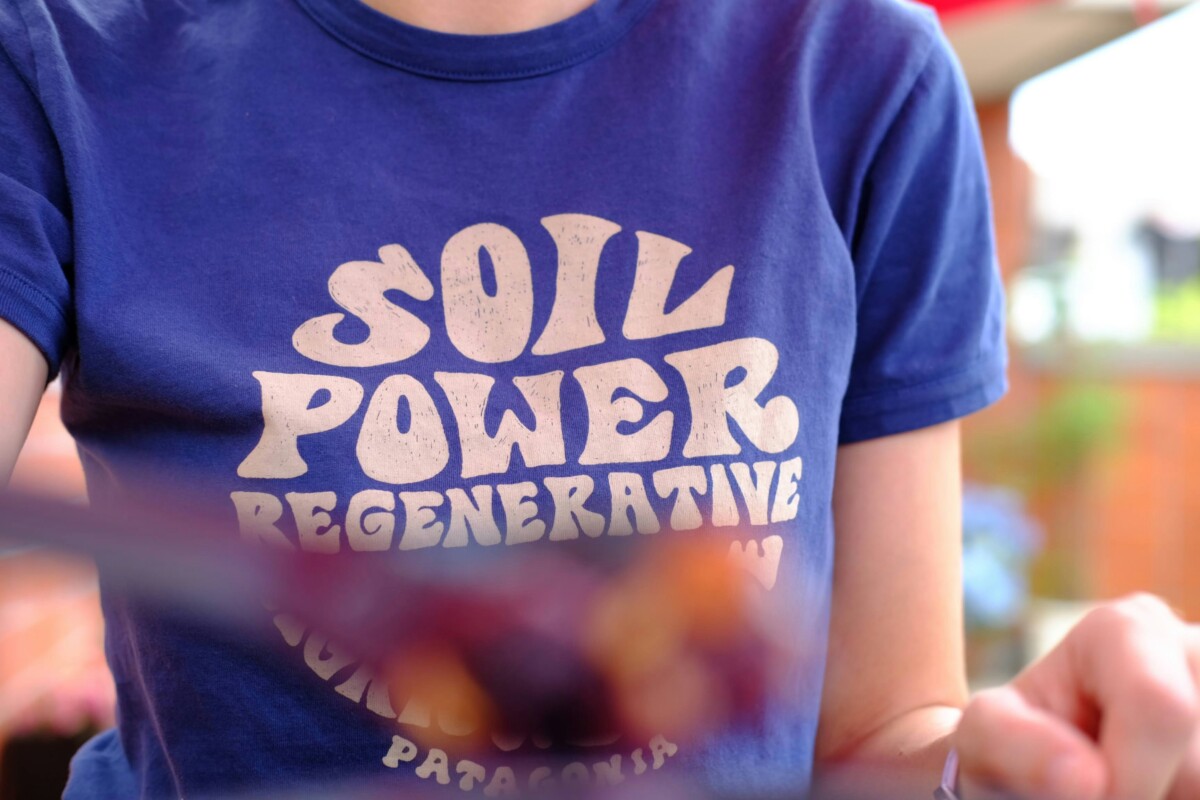
Patagonia opens its 2025 Work in Progress Report with a simple but striking line: “Nothing we do is sustainable.”

It sets the tone for everything that follows. Instead of trying to position itself as perfect, Patagonia explains the real impact of its business and the work still ahead. This approach is not just a style choice. It looks and feels like the behaviour a strong green claims policy is designed to create.

Even though Patagonia never calls it a policy, its progress report reads like an organisation already following one.


Why this matters: the gap between greenwash and greenhush


Most organisations are stuck between two pressures. Talk too confidently about sustainability and risk exaggerating. Stay quiet to avoid mistakes and risk hiding important information.

Patagonia chooses honesty instead. Early in the report it states that every product takes resources from the planet, and that its purpose and its impact are always in tension.

This is exactly where a green claims policy starts: with truth, and context.


The behaviours that resemble a green claims policy


Patagonia’s report shows many of the same traits that The Anti-Greenwash Charter defines as responsible sustainability communication.

Real transparency

Patagonia shares progress and setbacks with the same level of openness. For example:

  • Its emissions rose by 2 percent due to the materials used in FY25.

  • Only 6 percent of its synthetic fabrics come from secondary waste, far short of its 50 percent goal.

  • Only 39 percent of factories in scope currently pay a living wage.

Many companies hide numbers like these. Patagonia publishes them clearly. This is what a real green claims policy demands.

Clear definitions and evidence

Patagonia explains how it measures impact and where the data comes from. It completes a full double materiality assessment following CSRD guidance. It lists the third-party audit bodies it works with, from the Fair Labor Association to the Science Based Targets initiative.

A good green claims policy requires exactly this kind of clarity.

Balanced and fair storytelling

Patagonia avoids self-congratulation and focuses on truth. It explains that “carbon neutrality” was not meaningful enough, so the company stopped using it and shifted to a tougher net-zero pathway. It also describes the nearly 20-year journey to remove PFAS from its products and why it took so long.

A good green claims policy avoids selective storytelling. Patagonia models that behaviour.

Simple and honest language

The report uses plain words like “messy”, “painful”, “wipeouts”, “damage” and “still learning”. This makes the claims easier to understand and harder to misinterpret.

This is the foundation of honest communication.


A clear journey that matches how a green claims policy works


The structure of Patagonia’s report mirrors the journey that responsible sustainability communication should follow.

Admitting uncertainty

“We do not have all the answers” appears early in the document. Many organisations would avoid a statement like this. A good green claims policy encourages it.

Giving context and clarity

Patagonia explains its methods, boundaries and limits. Readers can see how decisions were made and what assumptions were used.

Building trust through openness

Because the company shares challenges as well as achievements, the reader develops trust through transparency, not through slogans.

Backing communication with governance

Patagonia’s ownership structure places “Earth as our only shareholder”. This is not marketing. It is a legal structure that supports the company’s claims.

A green claims policy is strongest when it connects communication to governance. Patagonia demonstrates this link clearly.

 

So is Patagonia’s progress report a green claims policy in action

In practical terms, yes.

On paper, it is not a formal policy. But the behaviours are the same as those required by a strong green claims approach:

  • No exaggerated claims

  • Evidence for every statement

  • Clear limits and boundaries

  • Balanced reporting

  • Simple language

  • Honest context

  • Third-party verification

  • Clear ownership of impact

Patagonia’s report shows that transparent sustainability communication is possible when there is willingness, discipline and a clear sense of purpose.


What other organisations can learn


Here are the key lessons from Patagonia’s approach:

Start by naming the truth

“Nothing we do is sustainable” removes the pressure to pretend and creates space for real action.

Focus on the context, not the slogans

Patagonia explains the decisions behind the claims. This gives the claims weight.

Share the full picture

Greenwash thrives when companies hide the difficult parts. Patagonia shows the whole story.

Don’t wait for perfect data

The report is honest about what is still incomplete. A good green claims policy supports this kind of honesty.

Align the message with the business

Patagonia’s ownership model strengthens the credibility of its sustainability work. This is rare and powerful.


Closing thought


Patagonia’s progress report is not perfect. It was never meant to be. But it shows what responsible sustainability communication looks like when a company commits to honesty, clarity and accountability.

It is not just a report. It is a practical example of how a green claims policy works when it is treated as a mindset, not simply a document.

Sustainability Communications with Confidence


If your organisation wants to protect its reputation, reduce greenwashing risk, and communicate sustainability with confidence, we’d love you to join us.

📢 Become a signatory of The Anti-Greenwash Charter.
Shape the future of responsible communication and show stakeholders what honest, trusted sustainability leadership looks like.


Join the Charter →

The Age of Unfiltered Everything: What Happens When Anyone Can Say Anything?

The Age of Unfiltered Everything: What Happens When Anyone Can Say Anything?

A world where anyone can say anything has created confusion, weakened trust and left sustainability communication struggling to stay honest, clear and understood.

Date: November 2025
Read time: 3 mins
Author: TAGC

Not long ago, most information passed through some kind of filter. Editors, producers and experts shaped what reached the public. It was far from perfect, but there was structure. Today, that structure has almost disappeared.

We now live in what many call the Age of Unfiltered Everything. Anyone can publish a post, create a video, or make a claim that reaches millions within hours. Some of this is empowering. Some of it is deeply confusing. And all of it has changed how people understand the world around them.

“It didn’t happen overnight,” says Charlie Martin, CEO and Founder of The Anti-Greenwash Charter.

“But over time, we saw communication speeding up and slowing down our ability to understand things. It became louder, faster, and harder to trust.”

This shift has affected many areas of society. But one of the most vulnerable is sustainability.


The Feed Has Become the Frontline


The last decade gives us plenty of examples of how quickly information can spread and how easy it is for stories to travel without being checked.

Consider a few moments that defined this era:

The pattern is clear. The systems that spread information have outpaced the systems that check it.

“When the reward is attention, not accuracy, the loudest story wins,” Charlie says.


Why Sustainability Is Caught in the Crossfire


Sustainability communication is complicated. It involves science, long-term goals and constant change. That makes it vulnerable in a world that prefers quick stories.

Recent examples show how easily things can go wrong:

  • Several major fashion brands have been investigated by the UK’s Competition and Markets Authority for unclear or exaggerated claims about recycled or sustainable products.

  • Advertising regulators in Europe and elsewhere have challenged energy companies for presenting renewable efforts in ways that did not reflect the full picture.

  • The Volkswagen emissions case in 2015 raised questions about how technical claims are communicated and verified.

These incidents damaged trust far beyond the companies involved. They shaped how the public views sustainability claims as a whole.

“Even responsible teams felt the impact,” Charlie says.

“When trust drops in one place, it drops everywhere.”


When Fear Leads to Silence


As scrutiny increased, something unexpected happened. Many organisations became more cautious about communicating anything at all.

A 2023 analysis by South Pole found that more than half of surveyed companies were holding back on sustainability communication. They were afraid of making mistakes, being misinterpreted or being accused of overstating their progress.

This behaviour has become known as greenhushing.

“Most of the people staying quiet had nothing to hide,” Charlie explains.

“They were simply unsure how to speak clearly and confidently in a very unpredictable environment.”

Silence creates its own problems. It hides progress. It confuses stakeholders. And it makes it harder for the public to see what good practice looks like.


Why Something Had to Change


Regulation has started to catch up. The EU’s Green Claims Directive and tightening advertising standards across the world show this clearly. But regulation alone cannot rebuild trust. Many organisations need help interpreting the rules, communicating clearly and making sure their message is fair and accurate.

“That’s why we created the Anti-Greenwash Charter,” Charlie says.

“We wanted to offer a clear, independent standard that supports organisations, not scares them. A standard people can rely on when they want to get communication right.”

The Charter is built on four simple standards: transparency, accountability, fairness and honesty. They act as a guideline for communication that is credible, balanced and easy to understand.

“It’s there to help people feel confident again,” Charlie adds. “And confidence is the foundation of trust.”


What a Better Future Could Look Like


If the last decade shows us what happens when communication becomes chaotic, the next decade could show us what happens when clarity returns.

Imagine a future where sustainability claims are presented in a way anyone can understand. Where companies feel able to share their progress openly. Where audiences trust what they hear because the evidence is clear and consistent.

“A trusted communication landscape is possible,” Charlie says.

“We just need shared standards and a commitment to being open about both progress and limitations.”

In the Age of Unfiltered Everything, the biggest challenge is not speaking louder. It is speaking clearly. Trust has become rare, and that makes it valuable. The organisations that earn it will be the ones who choose truth over noise.

And that is why something had to be done.

Sustainability Communications with Confidence


If your organisation wants to protect its reputation, reduce greenwashing risk, and communicate sustainability with confidence, we’d love you to join us.

📢 Become a signatory of The Anti-Greenwash Charter.
Shape the future of responsible communication and show stakeholders what honest, trusted sustainability leadership looks like.
Join the Charter →

Why Every Supplier Needs a Credible Green Claims Policy

Why Every Supplier Needs a Credible Green Claims Policy.

The Procurement Act 2023, CSRD and CSDDD together signal a new era of accountability, where suppliers must show not only what they achieve on sustainability, but how they communicate it.

Date: November 2025
Read time: 5 mins
Author: TAGC

Suppliers in every industry are under new pressure to prove that their sustainability claims can be trusted. Buyers, investors and regulators are no longer satisfied with broad promises about being green or net zero. They now expect those claims to be demonstrated, documented and defensible.

The Procurement Act 2023, the Corporate Sustainability Reporting Directive (CSRD) and the Corporate Sustainability Due Diligence Directive (CSDDD) together define this new era of accountability. They make clear that transparency and integrity are not optional values but legal and commercial necessities.

A structured Green Claims Policy (GCP), verified under The Anti-Greenwash Charter (TAGC), provides the practical framework suppliers need to meet these expectations.


Why this matters: the new risk landscape for suppliers


Misleading or exaggerated sustainability claims are no longer seen as minor marketing errors. They can now trigger contract termination, regulatory enforcement or legal challenge.

Procurement teams are required to check that suppliers communicate truthfully about environmental and social performance. That means every claim about a product, service or process, from carbon neutrality to recycled content, is open to scrutiny.

Suppliers therefore face two questions:

  • Can we prove what we claim?

  • Do we have a clear process for how these claims are approved and communicated?

The Procurement Act 2023 brings these questions to the forefront by embedding integrity, transparency and fairness as central procurement objectives. These align directly with TAGC’s four standards: transparency, accountability, fairness and honesty.


The Procurement Act 2023: integrity as a compliance test


Section 12: Procurement objectives

Under Section 12 of the Act, contracting authorities must:

  • deliver value for money

  • maximise public benefit

  • share information so that suppliers and others understand procurement decisions

  • act, and be seen to act, with integrity

This language establishes a clear link between procurement compliance and the accuracy of sustainability communication. A supplier that has a verified Green Claims Policy can show that it manages its claims responsibly and supports the buyer’s own duty to act with integrity.

Transparency notices and publication

The Act also requires authorities to publish “transparency notices” and more detailed contract information. Once sustainability-related promises appear in these public records, any inconsistency between claim and outcome becomes visible. A GCP ensures that suppliers have governance processes to verify claims before they reach the public domain.

Fair treatment and SME access

Section 12 also calls for equal treatment of suppliers and removal of barriers for small and medium-sized enterprises. A clear Green Claims Policy helps SMEs compete on credibility, not just scale. It provides a practical way to show integrity without expensive certification schemes.

Frameworks and long-term contracts

Public and private frameworks increasingly require sustainability assurance over multiple years. A GCP offers ongoing governance so that claims made at the start of a contract remain consistent with performance through its lifetime.


Connecting the dots: CSRD and CSDDD


CSRD – accuracy and transparency in reporting

The Corporate Sustainability Reporting Directive requires large and listed companies to publish standardised sustainability information that is complete, consistent and comparable. Suppliers feeding data or narratives into those reports must therefore ensure their own claims are accurate and traceable. A GCP supports this by linking communication to evidence, reducing the risk of errors that could compromise the buyer’s CSRD disclosures.

CSDDD – due diligence across the value chain

The Corporate Sustainability Due Diligence Directive extends responsibility beyond an organisation’s walls. Companies must identify and prevent negative environmental and human-rights impacts throughout their value chain. For suppliers, this means every claim about sustainable materials, ethical sourcing or emissions reduction must be backed by demonstrable governance. A GCP provides that governance, documenting how claims are created, verified and approved at each step.

Together, the Procurement Act, CSRD and CSDDD form a connected framework:

  • Procurement demands integrity and openness.

  • Reporting demands precision and comparability.

  • Due diligence demands accountability across the chain.

A verified Green Claims Policy ties these together in one coherent system of trust.


What a Green Claims Policy delivers


A Green Claims Policy turns sustainability communication into a controlled process rather than a marketing exercise. It sets out:

  • clear roles for creating and approving claims

  • evidence standards for each type of statement

  • requirements for third-party verification where needed

  • guidance on language, proportionality and context

  • review cycles to keep information current

For buyers, seeing that a supplier has a verified GCP provides assurance that sustainability statements can be relied upon. For suppliers, it reduces risk and shows maturity in governance.


Practical steps suppliers can take


  1. Draft or update a Green Claims Policy. Define how environmental and social claims are produced, reviewed and signed off.

  2. Train teams. Make sure staff in communications, sales, and procurement understand what constitutes a compliant claim.

  3. Collect and store evidence. Keep records of data, certifications, or third-party validations that support each claim.

  4. Engage the supply chain. Ask sub-suppliers to provide their own documented evidence or adopt simplified GCPs.

  5. Align policies with CSRD and CSDDD. Ensure claim governance supports data accuracy for CSRD reporting and risk mapping for CSDDD due diligence.

  6. Reference GCPs in tenders. When responding to RFIs or RFPs, include your verified Green Claims Policy to demonstrate procurement-readiness and integrity.


The emerging benchmark for trust


The rules shaping business conduct are converging around one principle: claims must match reality.

The Procurement Act 2023 ensures that public contracts reward integrity. The CSRD ensures that corporate reporting reflects evidence. The CSDDD ensures that due diligence extends across the entire value chain.

A verified Green Claims Policy helps suppliers meet all three demands. It gives buyers confidence, strengthens compliance, and protects reputation.

For suppliers, this is the next compliance frontier, moving beyond making sustainability claims to governing them with transparency, accountability, fairness and honesty.

Sustainability Communications with Confidence


If your organisation wants to protect its reputation, reduce greenwashing risk, and communicate sustainability with confidence, we’d love you to join us.

📢 Become a signatory of The Anti-Greenwash Charter.
Shape the future of responsible communication and show stakeholders what honest, trusted sustainability leadership looks like.
Join the Charter →

The Meaning Behind the Mark

The Meaning Behind the Mark.

The story and purpose of The Anti-Greenwash Charter logo.

Date: November 2025
Read time: 2 mins
Author: TAGC

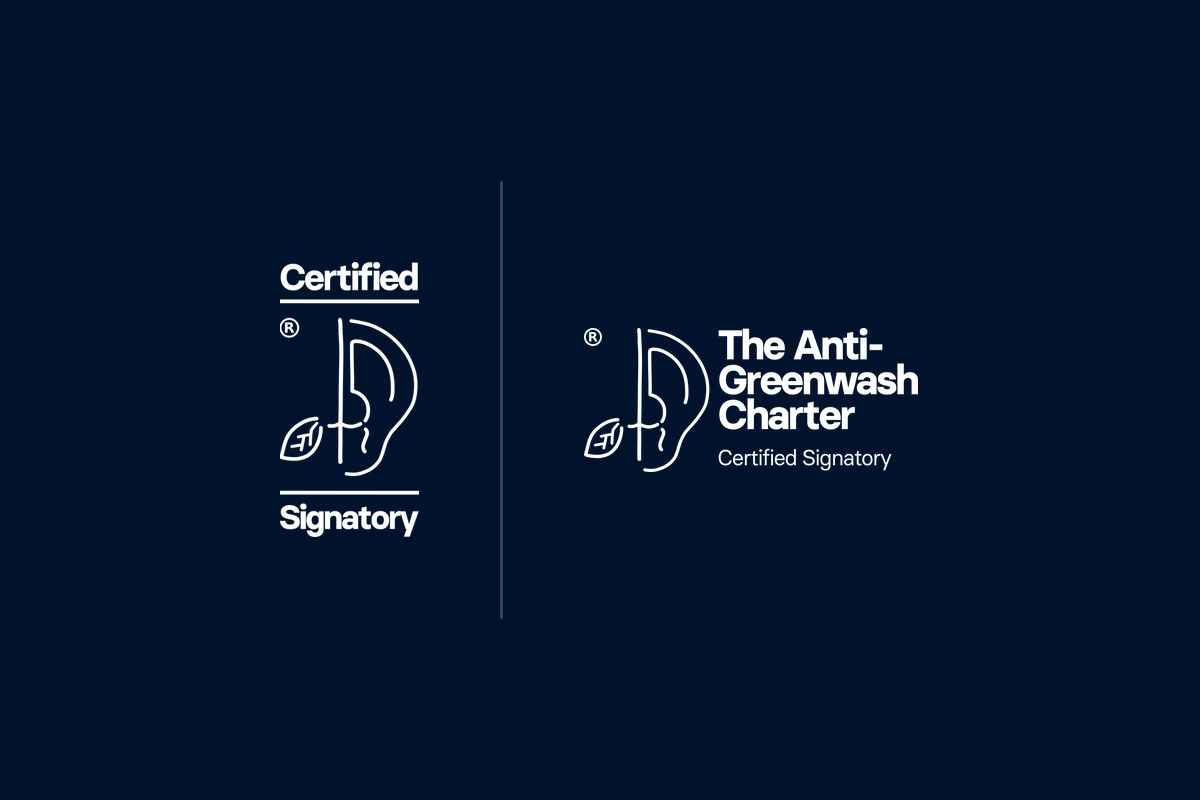
The Anti-Greenwash Charter mark was designed to stand for something clear and human: honest communication about sustainability. Every element of the design has meaning, and together they reflect what the Charter exists to do; help organisations communicate with truth, transparency, and trust.


Listening before leading


The logo brings together two core ideas: listening and sustainability.

The ear shape represents listening, one of the Charter’s founding principles. Real progress begins when organisations listen to their audiences, communities, and stakeholders before they speak. It’s about understanding before acting, and dialogue before declaration.

The leaf inside the ear symbolises sustainability, growth, and care for impact. It connects the human act of listening with the natural world, reminding us that sustainability communication is both a human and environmental responsibility.

Every part of the mark links back to the Charter’s four core standards: Transparency, Accountability, Fairness, and Honesty.


A mark with meaning for signatories


When an organisation becomes a signatory, it earns the right to use the Charter’s certified marks. These are not decorative. They are visible proof of a public commitment to responsible communication.

Each version of the mark serves a specific role:

Certified Signatory Mark

Used by organisations that have formally joined the Charter and committed to applying its standards across all sustainability communications. It shows that the organisation’s internal processes and external messages are being reviewed and strengthened through independent guidance and peer accountability.

Reviewed Campaign Mark

Used for specific campaigns, advertisements, or reports that have been individually reviewed by The Anti-Greenwash Charter team. It signals that a piece of communication has been checked for clarity, accuracy, and appropriate context post publication. This gives audiences confidence that the claims made have been responsibly presented and supported by evidence.

Green Claims Policy Statement

A supporting asset that sits alongside signatory content. It invites transparency by encouraging readers to understand the full context of any claim and to share feedback or concerns. It also links to the organisation’s own Green Claims Policy, which sets out how it ensures accuracy and responds to any concerns raised.

Together, these assets form a full recognition system for responsible sustainability communication. They create a clear, consistent way for organisations to demonstrate integrity and build trust with stakeholders.


Why the Charter mark matters


The mark helps organisations find the right balance between greenwash and greenhush. Too often, businesses either overstate their impact or stay silent out of fear of criticism. The Charter gives them a framework for speaking with confidence and care.

Displaying the mark tells audiences three things:

  1. The organisation’s sustainability messages are backed by an independent standard.

  2. It welcomes scrutiny, feedback, and improvement.

  3. It believes communication should drive progress, not confusion.

The mark is not a badge of perfection. It is a sign of accountability, openness, and ongoing learning. It helps organisations move from uncertainty to clarity, from compliance to leadership.


A growing community of responsible communicators


Every signatory helps shape a new standard for how sustainability is discussed. By using the mark, they show that honest communication is not just possible, it is powerful.

The Charter community is built on collaboration and shared learning. Each organisation that joins helps strengthen the credibility of sustainability communication across industries and regions.

When you see The Anti-Greenwash Charter mark, you know the organisation behind it is serious about truth and trust.

Sustainability Communications with Confidence


If your organisation wants to protect its reputation, reduce greenwashing risk, and communicate sustainability with confidence, we’d love you to join us.

📢 Become a signatory of The Anti-Greenwash Charter.
Shape the future of responsible communication and show stakeholders what honest, trusted sustainability leadership looks like.
Join the Charter →

What If Sustainability Communication Actually Worked?

What If Sustainability Communication Actually Worked?

How better communication could unlock faster decisions, stronger trust, and real climate progress.

Date: October 2025
Read time: 2 mins
Author: TAGC

Imagine a world where every sustainability claim was clear, honest and easy to understand. No vague promises. No exaggerated headlines. Just straightforward information that people could trust.

In that world, businesses would still set ambitious goals, but they would speak about them openly and with evidence. Consumers would know which brands to believe. Investors would see where to put their money. Governments would have the facts they need to shape policy. And decisions could be made faster, with more confidence.

This future is possible. It starts with changing how we communicate.

“When communication is clear, honest and consistent, everything else moves faster. Good decisions depend on good information,” says Charlie Martin, Founder and CEO of The Anti-Greenwash Charter.


From Confusion to Clarity


Right now, sustainability messages are often confusing. Some sound too good to be true. Others are so cautious that they say nothing at all. The result is uncertainty.

When people do not know what to believe, they delay decisions. They stay silent. They hold back. And that slows down progress.

Now imagine if communication followed a clear, shared standard. Every claim would be backed by evidence. Language would be consistent and easy to follow. Good work would be easier to recognise.

With better communication, trust would grow. And with trust, action becomes possible.

“Greenwash creates distrust. Greenhush creates silence. Neither helps anyone. What we need is confident, credible communication that earns trust and supports action,” says Charlie.


Better Decisions, Quicker Progress


Clear communication does more than build trust. It helps everyone move faster.

If investors had reliable information, they could support companies making real change. If governments could see what businesses were actually doing, they could set better rules. If consumers could understand sustainability claims quickly, they could make better choices.

This kind of clarity would help the best ideas rise faster. It would reduce hesitation. It would reward action over noise.

“Sustainability leaders are often held back by a lack of clarity in the market. We need to shift the culture so that strong communication supports strong action,” says Charlie.


Trust Is the Foundation


We often talk about building new systems to solve the climate crisis. Cleaner energy. Better transport. Greener materials. But we also need to build something else. We need to build trust.

Trust is what allows collaboration. It helps people take risks. It supports long-term thinking. And it creates the space for honest conversations.

When organisations follow a clear communication standard, they show they are serious. They make it easier for others to believe in their progress. And they encourage more open, confident leadership.


A Better Future Starts With Better Comms


This is not just about avoiding greenwash. It is about creating a culture where honesty is valued. Where strong communication supports real action. And where trust becomes the default, not the exception.

The Anti-Greenwash Charter exists to make this future possible. We provide a clear standard for responsible communication. We help organisations speak with confidence, reduce risk and earn lasting trust.

“When we raise the standard of communication, we raise the standard of action. That’s how we create lasting change,” says Charlie.

Because when we use better comms, we create better outcomes. And that is how real change becomes realistic.

Sustainability Communications with Confidence


If your organisation wants to protect its reputation, reduce greenwashing risk, and communicate sustainability with confidence, we’d love you to join us.

📢 Become a signatory of The Anti-Greenwash Charter.
Shape the future of responsible communication and show stakeholders what honest, trusted sustainability leadership looks like.

Join the Charter →

The Biggest Greenwashing Fines of 2025 and What They Teach Us

The Biggest Greenwashing Fines of 2025 and What They Teach Us.

What this year’s biggest fines reveal about the future of sustainability communication.

Date: October 2025
Read time: 3 mins
Author: Charlie Martin

This year has seen a clear shift in how regulators deal with misleading sustainability claims. Around the world, authorities are handing out record-breaking fines and sending a strong message. If you make green claims, they need to be accurate, clear, and backed by evidence.

Below are three of the biggest greenwashing fines in 2025 so far. Each case highlights the risks of getting sustainability communication wrong and the growing importance of honesty and clarity.


1. DWS fined €25 million in Germany


In April, German prosecutors fined asset manager DWS €25 million for overstating its ESG credentials. The company described itself as a leader in ESG and claimed that sustainability was built into its investment approach. But investigators found that these claims did not match how the company actually operated.

This is one of the largest greenwashing fines in the financial sector so far. It shows that even investment firms are being held to account for the words they use.

Key takeaway: If you say you are a leader, you need strong evidence. Avoid big claims unless they are backed by real action and data.


2. Shein fined €1 million in Italy


Fast fashion brand Shein was fined €1 million by the Italian Competition Authority for misleading environmental messaging. This followed a larger €40 million fine in France for similar issues.

In Italy, Shein promoted its “evoluSHEIN by design” collection as sustainable. But regulators found the claims were vague and unclear. Some claims about recyclability and circular production were also found to be false. The company’s climate targets were criticised for lacking evidence and not matching recent performance.

Key takeaway: Avoid using broad green terms like “eco” or “sustainable” unless you clearly explain what they mean. Climate targets should be realistic and based on up-to-date data.


3. Active Super fined A$10.5 million in Australia


In early 2025, Australia’s Federal Court fined superannuation fund Active Super 10.5 million Australian dollars. The fund claimed to exclude certain industries, but it continued to invest in them. This included companies involved in fossil fuels and controversial weapons.

The court also ordered Active Super to publish a public notice about the fine. This shows that the consequences can be both financial and reputational.

Key takeaway: What you say in public must match what you do behind the scenes. Gaps between messaging and reality can lead to serious consequences.


What these cases tell us


Across all three cases, some clear patterns are emerging:

  • Every sector is being looked at. It is not just oil and gas. Finance, fashion, and consumer brands are all under the spotlight.

  • Vague language is risky. Words like “green,” “eco-friendly,” and “sustainable” need clear meaning and proof.

  • Targets must be backed by action. Saying you aim to reach net zero is not enough. Regulators now check if your recent actions support that goal.

  • Fines are not just financial. Some companies are required to issue public corrections. The damage can be long-lasting.

  • A fine in one country can raise questions in others. This is especially true for global brands.


How the Anti-Greenwash Charter helps


These cases show how easy it is for even well-meaning organisations to get caught out. The standards for sustainability communication are rising quickly. The Anti-Greenwash Charter helps companies meet those standards with confidence.

Here is how the Charter supports its signatories:

  • Independent review. We help you check claims before they go live, so you can avoid greenwashing risks.

  • Clear standards. All messaging is measured against four key principles: Transparency, Accountability, Fairness, and Honesty.

  • Ongoing support. We offer more than one-time reviews. We work with you as your strategy and communications evolve.

  • Learning community. Signatories learn from each other’s experience, so you can stay ahead of emerging risks.

  • Trusted signal. Being a signatory shows your stakeholders that your claims are independently reviewed and verified.

If your organisation is serious about building trust through clear and honest communication, the Charter can help.

Sustainability Communications with Confidence


If your organisation wants to protect its reputation, reduce greenwashing risk, and communicate sustainability with confidence, we’d love you to join us.

📢 Become a signatory of The Anti-Greenwash Charter.
Shape the future of responsible communication and show stakeholders what honest, trusted sustainability leadership looks like.

Join the Charter →