Greenhushing Is Real — But It’s Not Inevitable

Greenhushing Is Real— But It’s Not Inevitable.

Why fear is silencing sustainability, and how credibility—not caution—is the future of climate leadership

Date: July 2025
Read time: 3 mins
Author: The Anti-Greenwash Charter
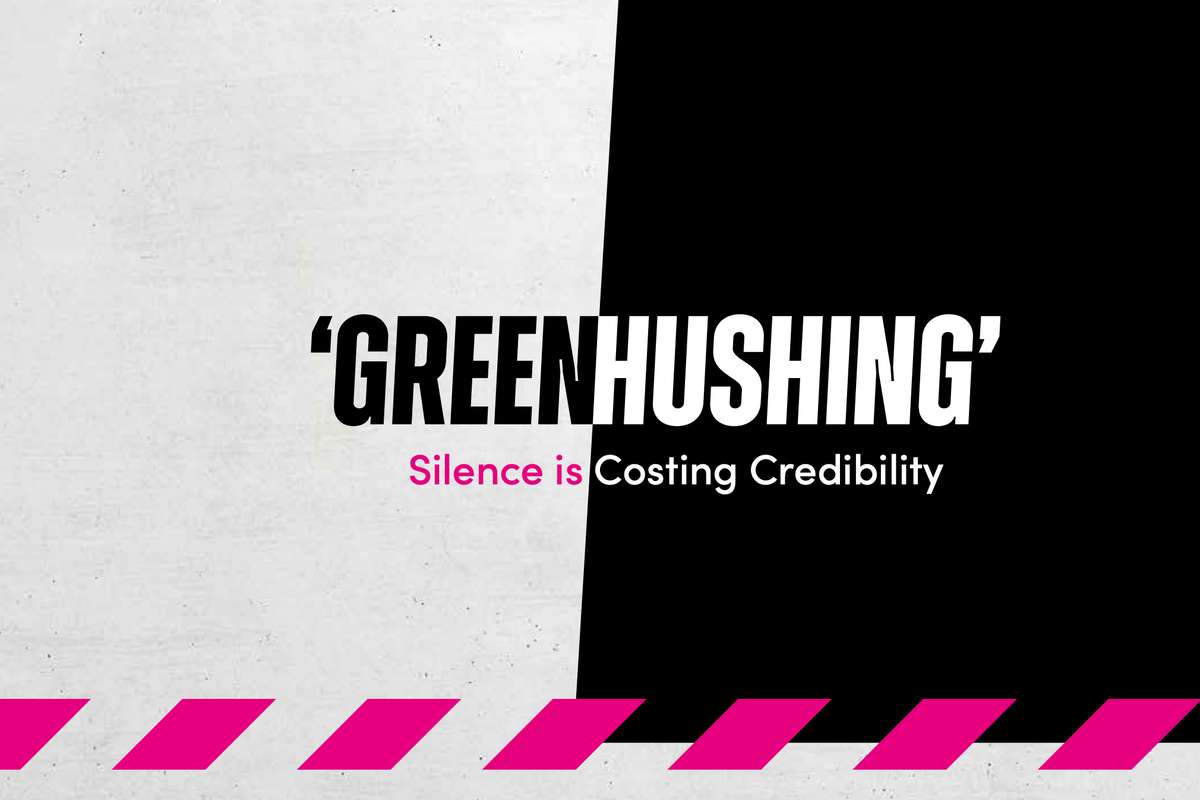
In the world of corporate sustainability, the volume of communications is dropping. Not because nothing’s happening—but because too much might be said the wrong way.

This phenomenon now has a name: greenhushing. And it’s growing fast.

According to new research from Futurebuild, The Anti-Greenwash Charter, The Carbon Literacy Project and Hattrick, over a third of built environment professionals say their organisations have actively pulled back on sustainability communications in the last 12 months.

Not because of a lack of progress—but because of a growing fear: the fear of getting it wrong.


When Fear Silences Progress


For many in construction and the wider built environment, the pressure to deliver net zero targets is real—but so is the fear of public scrutiny, media backlash, or regulatory missteps.

It’s created a culture of caution. And in some cases, complete silence.

Yet this sector is critical. Responsible for over 40% of UK emissions, it’s central to retrofit, resilience, regeneration. To climate action.

But only 18% of over-45s believe the industry is building a sustainable future. Trust is fragile. And trust is built on transparency—not perfection.


Confidence Is the Missing Link


The research makes something else clear: greenhushing isn’t a values problem. It’s a skills and systems gap.

  • Just 18% of professionals feel very confident spotting greenwashing

  • Half of marketers say they feel uneasy working on sustainability campaigns

  • And only 5% have final say over what is communicated

This isn’t about saying less. It’s about not knowing what’s safe to say—and who decides.

“People aren’t greenhushing because they don’t care,” said one survey respondent. “They’re doing it because they’re scared of saying the wrong thing—even when the intention is good.”


From Silence to Structure


Despite policy setbacks like the EU’s stalled Green Claims Directive, there is growing appetite for practical, independent support. Not more PR spin—just clarity, checks, and credible communication.

That might take the form of:

  • Publishing internal green claims policies to guide comms teams

  • Using third-party reviews to strengthen and sanity-check messaging

  • Adopting sector-wide frameworks that promote transparency over perfectionism

One emerging approach offers sustainability teams the option to submit reports for independent review—not to verify performance, but to ensure their messaging aligns with key regulations like the Green Claims Code, ASA guidelines, and ISO standards. A transparency report and certification accompanies the result—not as a marketing stunt, but as a quiet show of diligence.

It’s not flashy. But it’s effective. And it helps teams speak more confidently without falling silent.

 

The Case for Courageous Clarity


Greenhushing may feel like a protective move—but over time, it leaves organisations vulnerable in other ways.

Without communication, culture change stalls. Trust erodes. The public disengages. And the organisations doing meaningful work lose the ability to differentiate themselves from those who aren’t.

Progress doesn’t need to be perfect before it can be communicated. But it does need to be honest, humble, and evidence-led.

“Silence isn’t a long-term strategy,” said Charlie Martin, CEO of The Anti-Greenwash Charter. “At best, it’s a pause. At worst, it’s a loss of public confidence.”


The Real Shift Begins With Confidence


There’s no single fix for greenhushing. But the organisations that will lead the next era of sustainability will be those that can speak credibly—not loudly, but clearly.

That doesn’t require more marketing. It requires better foundations. And perhaps most of all, the willingness to say:

“This is what we’ve done. Here’s where we’re headed. And this is what we still don’t know.”

Because in a noisy world, quiet transparency speaks volumes.

Sustainability Communications with Confidence


If your organisation wants to protect its reputation, reduce greenwashing risk, and communicate sustainability with confidence, we’d love you to join us.

📢 Become a signatory of The Anti-Greenwash Charter.
Shape the future of responsible communication and show stakeholders what honest, trusted sustainability leadership looks like.
Join the Charter →

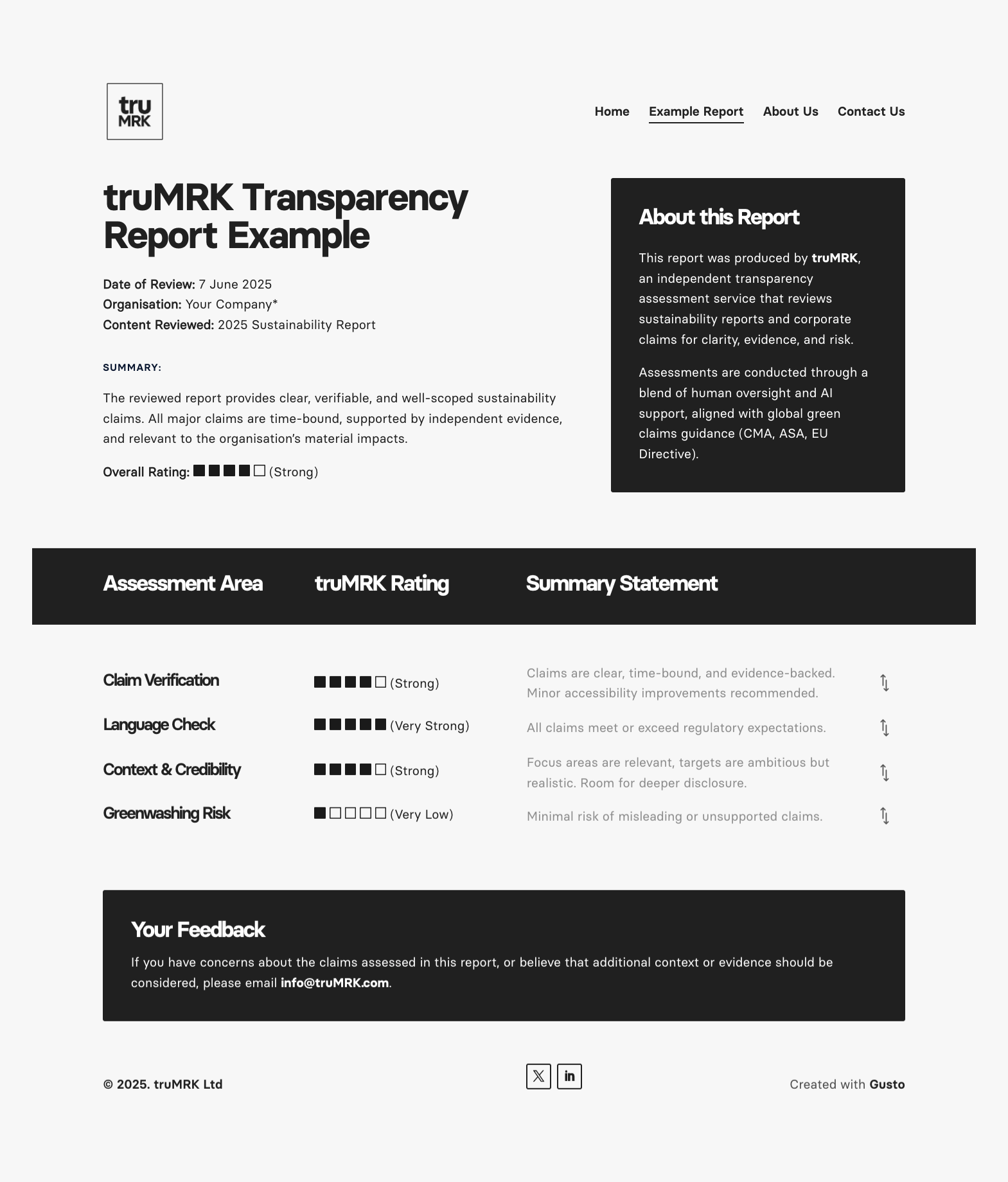
Introducing truMRK: A New Standard in Sustainability Transparency

Introducing truMRK: A New Standard in Sustainability Transparency.

Date: July 2025
Read time: 3 mins
Author: The Anti-Greenwash Charter

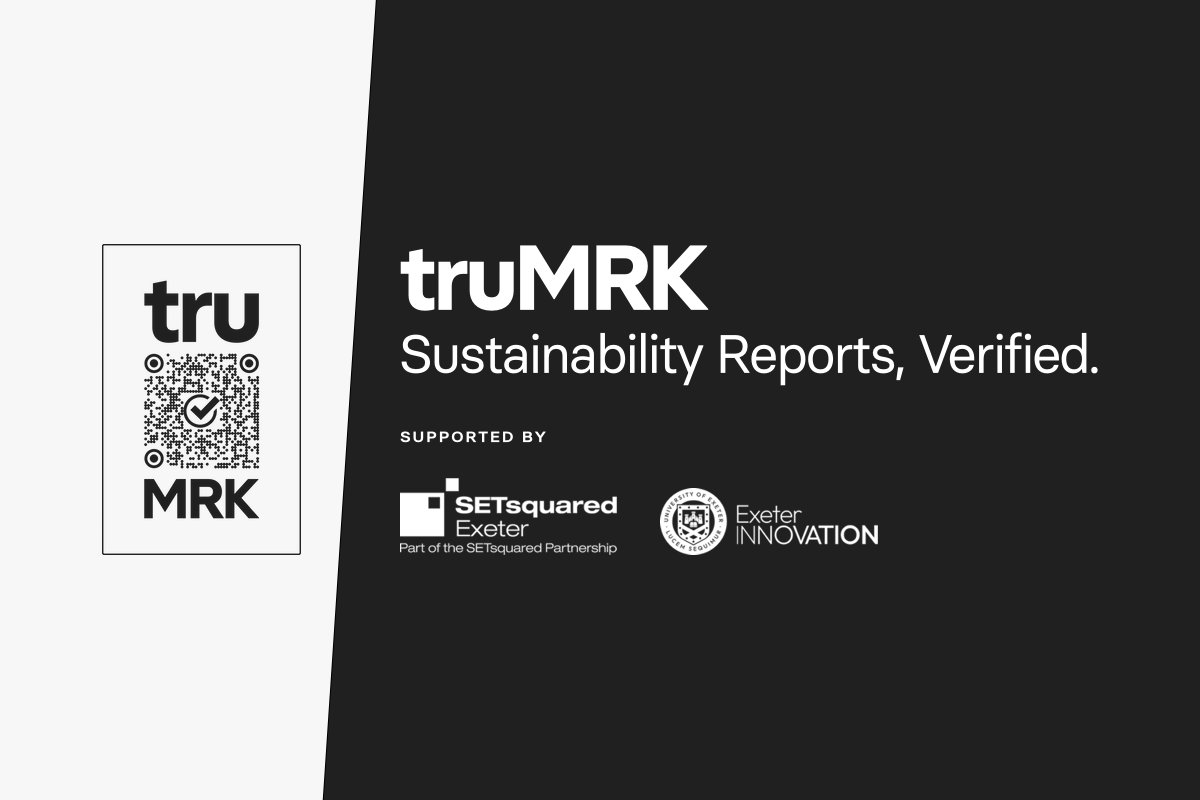
We’re proud to announce the launch of truMRK — a new independent verification service designed to help organisations communicate their sustainability claims with greater clarity, evidence, and integrity.

Born from the mission and values of The Anti-Greenwash Charter, truMRK responds to a growing challenge facing businesses today: how to earn trust in a landscape flooded with vague, exaggerated, or poorly evidenced environmental messaging.


Why We Built truMRK


At The Anti-Greenwash Charter, we’ve long been committed to raising standards in sustainability communication. Through our campaign reviews, guidance frameworks, and training, we’ve supported organisations in aligning their claims with regulatory expectations and public trust.

But we also saw the need for a practical, visible tool — one that could help businesses demonstrate they’ve done the work to substantiate their claims, and that their sustainability communications can stand up to scrutiny.

That’s where truMRK comes in.


What is truMRK?


truMRK is a digital mark of editorial integrity — awarded to sustainability reports that have been independently reviewed for transparency and responsibility.

Each truMRK links to a concise, public-facing Transparency Report. This outlines:

  • Which claims were assessed

  • What evidence supports them

  • How responsibly language is used

  • Whether sources are credible and appropriate

  • Where risks, gaps, or weaknesses remain

Importantly, the review doesn’t attempt to verify technical performance data. Instead, it evaluates how clearly and responsibly an organisation communicates its claims — and whether the content meets evolving stakeholder expectations, regulatory guidance (including the CMA’s Green Claims Code, ASA/CAP standards, ISO 14021), and best practice in ESG reporting.

Each report concludes with a final Transparency Score, helping organisations measure and improve how they communicate their impact.


Who It’s For


truMRK is designed for forward-thinking businesses that want to build trust through accountability — not just promises. It supports:

  • Sustainability & ESG teams aiming to ensure claims are well-evidenced and responsibly framed

  • Marketing & Comms professionals looking to reduce reputational risk and avoid greenwashing

  • Compliance & legal teams ensuring alignment with relevant regulations and standards

It’s especially useful for organisations preparing to publish a new sustainability or ESG report and wanting independent feedback before going live.


Founding Launch Offer


To mark the launch, truMRK is inviting 20 purpose-led organisations to become founding clients. These early partners will receive:

  • An independent review of their next sustainability report

  • A public Transparency Report and truMRK badge

  • Recognition as a founding contributor helping set the standard for credible sustainability communications

This is a limited opportunity to shape the future of the platform and lead by example in a critical area of corporate responsibility.

👉 Find out more and request access at trumrk.com


A Natural Extension of the Charter’s Mission


truMRK is more than a new tool — it’s a natural next step in The Anti-Greenwash Charter’s mission to promote transparency, rigour, and accountability in sustainability marketing. As greenwashing continues to erode public trust, businesses need practical ways to show they’re different.

With truMRK, we’re helping them do just that.

Sustainability Communications with Confidence


If your organisation wants to protect its reputation, reduce greenwashing risk, and communicate sustainability with confidence, we’d love you to join us.

📢 Become a signatory of The Anti-Greenwash Charter.
Shape the future of responsible communication and show stakeholders what honest, trusted sustainability leadership looks like.

Join the Charter →

EU Pauses Anti-Greenwashing Law: What It Means for Sustainable Communications

EU Pauses Anti-Greenwashing Law: What It Means for Sustainable Communications.

Date: June 2025
Read time: 2 mins
Author: The Anti-Greenwash Charter

In a surprising move, the European Commission has announced it will withdraw the proposed Green Claims Directive, halting negotiations that would have required companies across the EU to substantiate environmental claims — like “climate neutral” or “recycled content” — with independent evidence.


Why the Law Mattered


  • A 2020 Commission study found that over half of environmental claims were vague or unsubstantiated.
  • The Directive aimed to tackle this by mandating independent verification and penalties for false, vague, or misleading claims.

This would have aligned with reforms passed by the European Parliament earlier this year, requiring environmental claims to be based on scientific evidence, third-party certification, and clear labelling.


Why the Rollback Happened


  • The European Commission cited an overwhelming administrative burden on micro businesses if they were included in the law.
  • Some lawmakers, particularly from conservative groups, argued the Directive was overly complex and costly, threatening to block the legislation unless it was withdrawn.


The Consequences


  • Without the Directive, companies won’t face mandatory pre-approved verification or legal penalties for misleading environmental claims, potentially weakening enforcement.
  • Trust in sustainability claims may erode further, making it harder for genuinely responsible businesses to stand out.
  • Responsibility for claim-checking and accountability now falls heavily on markets, NGOs, independent watchdogs, and movements like The Anti-Greenwash Charter.


What Comes Next


  • The European Commission may still pursue other consumer protection measures to address greenwashing, such as restrictions on vague offset-based claims.

  • Meanwhile, credible sustainability communications have never been more important. Businesses should proactively:
    ✅ Adopt independent third-party verification
    ✅ Publish clear, specific sustainability claims
    ✅ Engage with initiatives like The Anti-Greenwash Charter to demonstrate transparency and integrity


The Bottom Line


This pause highlights how fragile regulatory progress on greenwashing can be — even in markets like the EU. Without legal enforcement, brands that care about credibility need to lead by example.

As Charlie, CEO of The Anti-Greenwash Charter, puts it:

“Regulatory setbacks only make market integrity more vital. The difference between vague claims and verified truth becomes the difference between trust and mistrust.”

For brands serious about sustainability, the message is clear: self-regulation, independent verification, and honest communications aren’t optional — they’re the foundation for long-term trust.

Sustainability Communications with Confidence


If your organisation wants to protect its reputation, reduce greenwashing risk, and communicate sustainability with confidence, we’d love you to join us.

📢 Become a signatory of The Anti-Greenwash Charter.
Shape the future of responsible communication and show stakeholders what honest, trusted sustainability leadership looks like.
Join the Charter →

Why Independent Verification Is the Backbone of Honest Sustainability Communications

Why Independent Verification Is the Backbone of Honest Sustainability Communications.

Date: June 2025
Read time: 4 mins
Author: The Anti-Greenwash Charter

In the crowded, confusing world of sustainability marketing, words are cheap. Labels, certifications, and green claims flood product packaging, websites, and advertising—yet trust is in short supply.

Why? Because without independent verification, even the boldest sustainability statement is just that—a statement.

At The Anti-Greenwash Charter, we believe claim verification isn’t just a regulatory checkbox—it’s the cornerstone of credible sustainability communications. It’s how responsible brands prove they’re walking the talk. And it’s how consumers, investors, and regulators separate genuine action from greenwashing.


The Role of Third-Party Verifiers: Trust, Not Just Ticking Boxes


In an ideal world, all environmental claims would be substantiated, clearly communicated, and transparently backed by evidence. But in reality, too many organisations rely on vague language or internal assessments that lack rigour.

This is where independent, third-party verifiers come in.

By providing objective assessments, recognised certifications, and evidence-based validations, they bring accountability to sustainability communications. They ensure claims aren’t just legally compliant—but credible, specific, and trustworthy.

“We see claim verification as a critical layer of defence against greenwashing,” says Charlie, CEO of The Anti-Greenwash Charter. “It takes sustainability from marketing spin to measurable fact.”


Examples of Third-Party Verifiers We Respect


While the sustainability verification landscape is vast—and quality varies—not all verifiers are created equal. At the Charter, we encourage signatories to work with trusted, recognised organisations that uphold high standards for credibility.

Here are just a few we believe are making a meaningful contribution:

✅ The Carbon Trust

Respected for its rigorous lifecycle assessments and carbon footprint verification, the Carbon Trust plays a key role in demystifying emissions claims.

✅ Forest Stewardship Council (FSC)

FSC certification remains one of the most recognisable—and credible—marks for responsibly sourced forest products.

✅ TÜV Rheinland & Similar Accredited Testing Bodies

Known for independent product testing, TÜV Rheinland and similar bodies provide reliable verification, particularly in manufacturing and materials.

✅ The Soil Association & Organic Certifiers

In agriculture and food, certification bodies like the Soil Association offer clear, third-party standards for organic claims.


What Makes a Good Verifier?


When assessing third-party organisations, we look for:

Independence: Are they truly impartial?
Transparency: Are their methodologies and standards publicly available?
Global Recognition: Do regulators, NGOs, and consumers respect their work?
Rigour: Do they demand measurable, evidence-based substantiation?
Ongoing Scrutiny: Do they adapt to evolving best practices?

Not every verifier meets these standards. Some are little more than “pay-to-play” green labels. That’s why brands must be selective—and why we’re committed to championing verification partners that uphold integrity.


Collaboration is Key: Let’s Strengthen the System Together


At The Anti-Greenwash Charter, we’re actively exploring how we can align more closely with respected third-party verifiers. Our aim? To create a stronger, more transparent ecosystem where responsible brands, verification bodies, and consumer expectations all move in the same direction.

In the coming months, we plan to:

🔹 Reach out to leading verification organisations to explore partnership opportunities
🔹 Develop clearer guidance for signatories on selecting credible verifiers
🔹 Celebrate brands that use robust third-party verification to substantiate their claims

“Sustainability isn’t a self-assessment exercise,” says Charlie. “We need independent voices—scientists, auditors, experts—helping brands get this right.”


The Future of Sustainability Communications Is Verified


Greenwashing thrives in the absence of scrutiny. But when brands embrace independent verification, they don’t just comply with regulations—they build trust.

We see claim verification as a vital part of the Anti-Greenwash Charter’s future—and the future of responsible sustainability communications as a whole.

If you represent a verification body aligned with these values, we’d love to connect. Because building credibility isn’t a solo project—it’s a movement.

Sustainability Communications with Confidence


If your organisation wants to protect its reputation, reduce greenwashing risk, and communicate sustainability with confidence, we’d love you to join us.

📢 Become a signatory of The Anti-Greenwash Charter.
Shape the future of responsible communication and show stakeholders what honest, trusted sustainability leadership looks like.

Join the Charter →

The ESG Blind Spot: Why Communications Integrity Matters

The ESG Blind Spot: Why Communications Integrity Matters.

Date: June 2025
Read time: 2 mins
Author: The Anti-Greenwash Charter

When we talk about ESG, we talk about carbon emissions and energy transitions. We talk about human rights policies, supply chains, governance structures, and sustainable finance.

But we don’t talk nearly enough about language—about how sustainability is communicated to the world.

And that’s a problem. Because in a world where trust is fragile, the most dangerous thing a company can do is overpromise and under-explain.

This is the blind spot at the heart of ESG.

It’s not the numbers that break trust—it’s the words. The vague packaging claims. The carbon-neutral taglines that don’t stand up. The purpose-led storytelling that dodges real scrutiny.

And it’s exactly why The Anti-Greenwash Charter exists.


The Gap Between What Companies Do—and What They Say


Across industries, ESG has grown into a complex web of targets, disclosures, and scorecards. You can track emissions, report diversity figures, and align with science-based targets.

But none of that guarantees the way those efforts are communicated is fair, clear, or honest.

And right now, too many sustainability claims are designed to impress—not inform.

“What you say about your impact can be more powerful than the impact itself,” says Charlie, CEO of The Anti-Greenwash Charter. “It can shape perception, drive purchasing, influence policy—and if it’s not true, it can do serious damage.”


The Only ESG Movement Focused on Communications Integrity


B Corp, CDP, SBTi, ISSB—there are plenty of frameworks that assess what businesses do. But The Anti-Greenwash Charter is the only initiative focused on how businesses talk about what they do.

That makes it uniquely powerful—and urgently needed.

At a time when regulators are cracking down on greenwashing, consumers are calling out false claims, and trust in corporate sustainability is faltering, the Charter offers a new kind of standard:

🟢 One that’s built around communications
🟢 One that addresses how claims are made, not just what’s in the data
🟢 One that turns marketing from a risk into a responsibility

“The Charter doesn’t certify whether you’re sustainable—it holds you accountable for whether you’re being honest,” Charlie explains. “And that’s what makes it radical.”


Why Communications Must Be Treated as an ESG Risk


If a business overstates its emissions reductions or oversimplifies its sustainability impact, that’s not just bad marketing. That’s a governance failure, a reputational risk, and increasingly, a legal exposure.

With laws like the UK’s Green Claims Code and the EU’s Green Claims Directive, companies that once used green buzzwords with impunity are now facing real consequences.

But long before a regulator steps in, customers are already switching off. Because people know when they’re being sold something too good to be true.

“We’re not asking brands to be perfect,” Charlie says. “We’re asking them to be honest. To own the grey areas. To say, ‘Here’s what we’re doing—and here’s what still needs work.’”


A Movement for Brands That Lead With Integrity


The Charter isn’t a passive pledge. It’s a working standard—backed by a growing community of brands committed to doing better.

Signatories of the Charter commit to:
✅ Publishing a Green Claims Policy
✅ Participating in independent campaign reviews
✅ Substantiating every claim with evidence and clarity
✅ Continually improving their communications practices

And in doing so, they send a message—not just to their audiences, but to their industries:

“We will not contribute to the erosion of trust in sustainability.”

“When a brand joins the Charter, they’re not just signing a document—they’re choosing a side,” Charlie says. “They’re choosing to be part of the solution.”


This Is the Moment to Fix the Blind Spot


Sustainability is a story. And like any story, it’s only powerful if it’s credible.

We’ve spent years building tools to measure impact. Now it’s time to build systems that ensure that impact is communicated responsibly.

Because if we lose trust in the claims, we lose faith in the progress. And if the planet can’t afford delay, it certainly can’t afford deception.

Sustainability Communications with Confidence


If your organisation wants to protect its reputation, reduce greenwashing risk, and communicate sustainability with confidence, we’d love you to join us.

📢 Become a signatory of The Anti-Greenwash Charter.
Shape the future of responsible communication and show stakeholders what honest, trusted sustainability leadership looks like.
Join the Charter →

“This Is a Turning Point”: Why Taking a Stand on Corporate Misinformation Is a Strategic Opportunity

“This Is a Turning Point”: Why Taking a Stand on Corporate Misinformation Is a Strategic Opportunity.

Date: June 2025
Read time: 3 mins
Author: The Anti-Greenwash Charter

We’re living through a misinformation emergency, one that’s quietly undermining the fight against the climate crisis. Behind the glossy campaigns and net zero pledges, a quieter truth is being buried: that environmental claims are too often used to delay, distract, and deceive. For Charlie, CEO of The Anti-Greenwash Charter, the issue is not just urgent—it’s structural.

“Corporate misinformation isn’t just greenwashing gone rogue,” Charlie says. “It’s a system failure. And unless we confront it, we can’t build a future based on real progress.”

That’s the rationale behind The Charter: a collective commitment to dismantling misinformation and replacing it with something more powerful—integrity.


Misinformation: The Crisis Behind the Crisis


The problem is bigger than a few bad apples. From misleading climate targets to selective storytelling, the marketing machine often outpaces the science—and the substance. This is not just an ethical failing. It’s a strategic one.

“Misinformation dilutes ambition,” Charlie explains. “It gives cover to inaction. It tells a story of progress that’s not real—and in doing so, it robs us of the urgency and clarity we need.”

According to recent research, over half of consumers feel misled by environmental claims. Regulators are responding—from the EU’s Green Claims Directive to the UK’s crackdown on “greenhush” and greenwash alike. But legislation alone won’t be enough.

“The damage is already being done—in public trust, in policy delays, in misallocated capital,” Charlie says. “We need more than compliance. We need a cultural shift inside organisations—starting with those who control the message.”


Activism, Redefined


That’s where the opportunity lies. Not in waiting to be regulated—but in choosing to lead. The Anti-Greenwash Charter reframes transparency not as a burden, but as a differentiator. A way for organisations to align their voice with their values—and stand out for the right reasons.

“Activism doesn’t just happen in the streets,” Charlie says. “It happens in strategy meetings, marketing briefs, ESG reports. Every time someone inside a business says: ‘We’re not going to fudge this,’ that’s a stand.”

This is not about perfection. It’s about principles. The Charter offers a framework for honest, evidence-based communication—backed by peer accountability and clear expectations. It empowers those inside organisations to say: we can do better, and we want to.

“The Charter exists because people inside businesses are lacking confidence in their messaging,” Charlie explains. “They want a way to tell the truth—and be recognised for it.”


The Future Belongs to the Transparent


In a climate-constrained world, authenticity will be non-negotiable. But the first movers—the brands and agencies that embrace openness now—have a chance to shape that future. Not out of fear, but out of leadership.

“Taking a stand against corporate misinformation isn’t just a defensive play,” Charlie insists. “It’s a strategic one. It builds trust. It attracts talent. It creates resilience. And it sets the standard others will have to follow.”

The Charter is more than a pledge. It’s a community of doers—marketers, strategists, communicators—who are reclaiming their influence and using it for good.

“We don’t need more climate slogans,” Charlie says. “We need courage. We need consistency. And we need people willing to rewrite the rules of communication, not just reword the copy.”

Sustainability Communications with Confidence


If your organisation wants to protect its reputation, reduce greenwashing risk, and communicate sustainability with confidence, we’d love you to join us.

📢 Become a signatory of The Anti-Greenwash Charter.
Shape the future of responsible communication and show stakeholders what honest, trusted sustainability leadership looks like.

Join the Charter →